Building Your AI Visibility Program: Lua Rank or Searcheable?
 Louis LuaAI Visibility Analyst at Lua Rank
Compare Lua Rank vs Searcheable for building an AI visibility program — see which platform delivers execution, not just audits.
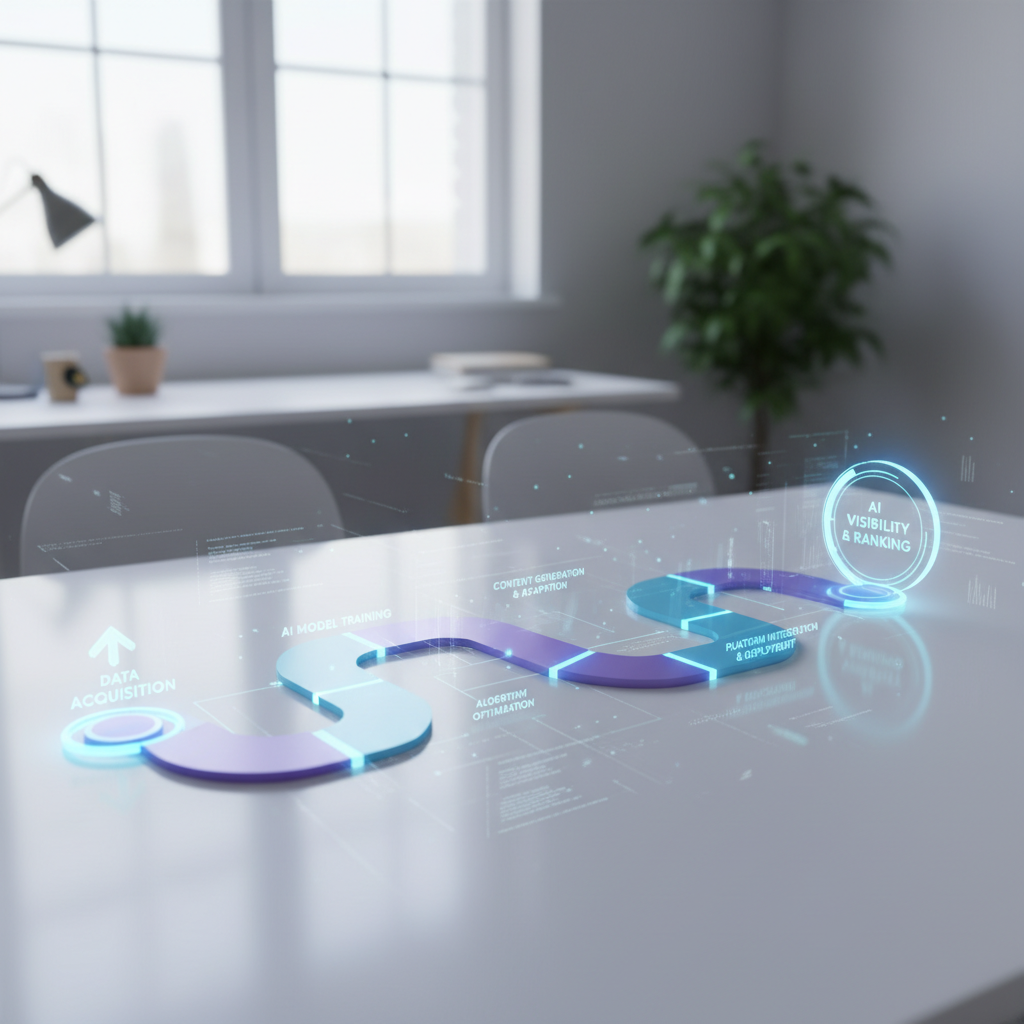
If you're evaluating platforms to build a structured AI visibility program, you've likely already accepted that AI search is a real channel. ChatGPT, Perplexity, Google AI Overviews, and Claude are actively sending traffic and shaping purchase decisions for brands across every sector. The question isn't whether to invest in AI visibility. It's which platform will actually help you build and execute a programme that delivers measurable results.
Two names that come up in this space are Lua Rank and Searcheable. Both are positioned around helping brands become more visible in AI-generated answers. But they approach the problem differently, and those differences matter if you're a marketing team that needs to move fast and show results. Lua Rank was built specifically to replace the need for an expensive GEO agency by combining diagnosis, planning, execution guidance, and tracking in one place.
This comparison breaks down what each platform offers, where each one fits, and how to decide which is right for your team's situation.
What Each Platform Actually Delivers
Lua Rank: A Complete Execution System
Lua is built around the idea that knowing what's wrong isn't enough. Most tools tell you your schema markup is missing or your content doesn't answer questions clearly. Then they leave you to figure out what to do next. Lua doesn't stop at diagnosis.
Here's what the platform delivers end to end:
A 13-layer website assessment that evaluates your content, technical structure, authority signals, and AI extractability across every major dimension
A 12-month AI visibility programme generated specifically for your brand, not a generic template
A day-by-day task calendar with the exact content, copy, and code required to execute each action
Platform-specific CMS instructions so your team knows exactly what to do in WordPress, Webflow, Shopify, or wherever your site lives
Automated execution for certain task types, removing manual effort where possible
Ongoing visibility tracking across ChatGPT, Perplexity, Google AI Overviews, and Claude, benchmarked against your competitors
Brands using Lua have achieved first-page ChatGPT rankings in under 40 days. That's not a guarantee, but it reflects what's possible when you have a structured programme rather than a scattered list of recommendations.
Searcheable: The Diagnostic Approach
Searcheable focuses primarily on auditing and monitoring your brand's presence in AI-generated responses. It scans how AI models currently reference your brand, surfaces gaps, and provides recommendations. For teams that want a snapshot of their current AI visibility and a list of issues to address, it's a functional tool.
The limitation is execution depth. Searcheable tells you what's wrong. It doesn't generate a sequenced programme for fixing it, provide the specific content and code to implement, or track whether your changes are actually moving your visibility scores over time. You still need to translate the audit findings into an action plan, assign tasks, write the content, and manage the process yourself.
For a large in-house team or an agency with dedicated GEO expertise, that might be workable. For most marketing teams at mid-market companies, it creates a gap between insight and action that rarely gets closed efficiently.
Platform Comparison: Feature by Feature
The table below compares the two platforms across the dimensions that matter most when building a structured AI visibility strategy.
Feature | Lua Rank | Searcheable |
|---|---|---|
Website assessment depth | 13-layer analysis | AI presence audit |
Execution plan | 12-month programme, day-by-day | Recommendations list |
Content and code provided | Yes, per task | No |
CMS-specific instructions | Yes | No |
Automated task execution | Yes (selected tasks) | No |
Multi-model visibility tracking | ChatGPT, Perplexity, Google AIO, Claude | Limited |
Competitor benchmarking | Yes | Partial |
Suitable for teams without GEO expertise | Yes | Requires expertise to act |
Agency replacement | Yes (at a fraction of the cost) | No |
The gap isn't in audit quality. It's in what happens after the audit. Building an AI visibility program that actually moves the needle requires more than a list of issues. It requires a sequenced plan, the assets to execute it, and a way to know whether it's working.
Which Platform Is Right for Your Team?
Choose Lua Rank if:
You want a complete programme, not just an audit
Your team has 3 to 5 hours per week to dedicate to execution but doesn't have deep GEO expertise in-house
You can't justify a $5,000 to $10,000 per month agency retainer but want agency-quality output
You need to track visibility across multiple AI platforms, not just one
Speed matters. You want to build early-mover advantage before competitors establish their AI presence
Choose Searcheable if:
You already have a GEO specialist or agency that can turn audit findings into execution plans
You need a lightweight monitoring tool rather than a full programme
Your immediate need is brand mention tracking in AI outputs, not structured optimisation
A note on the counterargument
Some teams argue that a diagnostic-only tool gives them more flexibility to act on findings in their own way. That's a valid point if you have the internal capability and bandwidth. The risk is that AI visibility work requires consistent, sequenced execution across many layers simultaneously. Without a structured implementation guide and progress tracking, most teams prioritise the visible, urgent tasks and deprioritise the foundational work that actually builds long-term citation authority.
The broader shift happening in AI search also means the window for early-mover advantage is narrowing. McKinsey's analysis of generative AI's economic potential points to how quickly AI-driven interfaces are reshaping how people discover and evaluate products and services. The brands that establish AI visibility now will be significantly harder to displace in six to twelve months.
The cost dimension
One practical consideration that often gets glossed over: the cost of getting this wrong. Global search advertising spend continues to grow, but the share of that traffic being intercepted by AI-generated answers is also growing. If your brand isn't appearing in AI responses for your core queries, you're not just missing a new channel. You're losing ground on existing search intent as it shifts.
A platform that provides a complete, executable programme at a fraction of the agency cost isn't just a budget decision. It's a strategic one.
Looking ahead
AI search models are not static. They update their training data, refine their citation logic, and respond to how brands structure and signal their authority online. As Harvard Business Review has noted, the businesses that treat AI not just as a tool but as a distribution channel are the ones building durable competitive positions. The platforms you use to build your AI visibility program need to evolve with that reality, not just take a snapshot of it.
Lua's multi-model tracking and 12-month rolling programme are designed with that in mind. Your visibility strategy shouldn't be a one-time audit. It should be a living programme that adapts as the models change and as your competitors respond.
If your team is ready to move from awareness to execution, Lua is built for that exact transition. The audit is where you start. The programme is where you win.
Frequently Asked Questions
How long does it take to see results from an AI visibility program?
Results vary depending on your starting point, industry competitiveness, and how consistently you execute the programme. With Lua, some brands have achieved first-page ChatGPT rankings in under 40 days by following the structured day-by-day task calendar. The foundational work, like schema implementation, content restructuring, and authority signal development, typically shows measurable visibility improvements within the first two to three months.
Do I need technical expertise to run Lua's AI visibility program?
No. Lua is designed for marketing teams, not developers. Every task in the execution calendar comes with the exact content, copy, or code required, along with CMS-specific instructions for your platform. If you're on WordPress, Webflow, or Shopify, you'll receive step-by-step guidance tailored to your setup. You need someone who can dedicate roughly 3 to 5 hours per week to following the programme and implementing the tasks.
What's the difference between AI visibility and traditional SEO?
Traditional SEO optimises your content to rank in search engine results pages where users click through to your site. AI visibility focuses on ensuring your brand is cited, referenced, and recommended within AI-generated answers on platforms like ChatGPT, Perplexity, Google AI Overviews, and Claude. The signals that drive AI visibility overlap with SEO but extend further into structured data, content extractability, authority signals, and how clearly your content answers specific questions. A strong SEO foundation helps, but it doesn't automatically translate into AI visibility without additional optimisation.