Is Answer Engine Optimization Worth the Investment?
 Louis LuaAI Visibility Analyst at Lua Rank
Answer engine optimization ROI explained with real timelines, cost comparisons, and metrics that matter for marketing teams evaluating AI search investment.
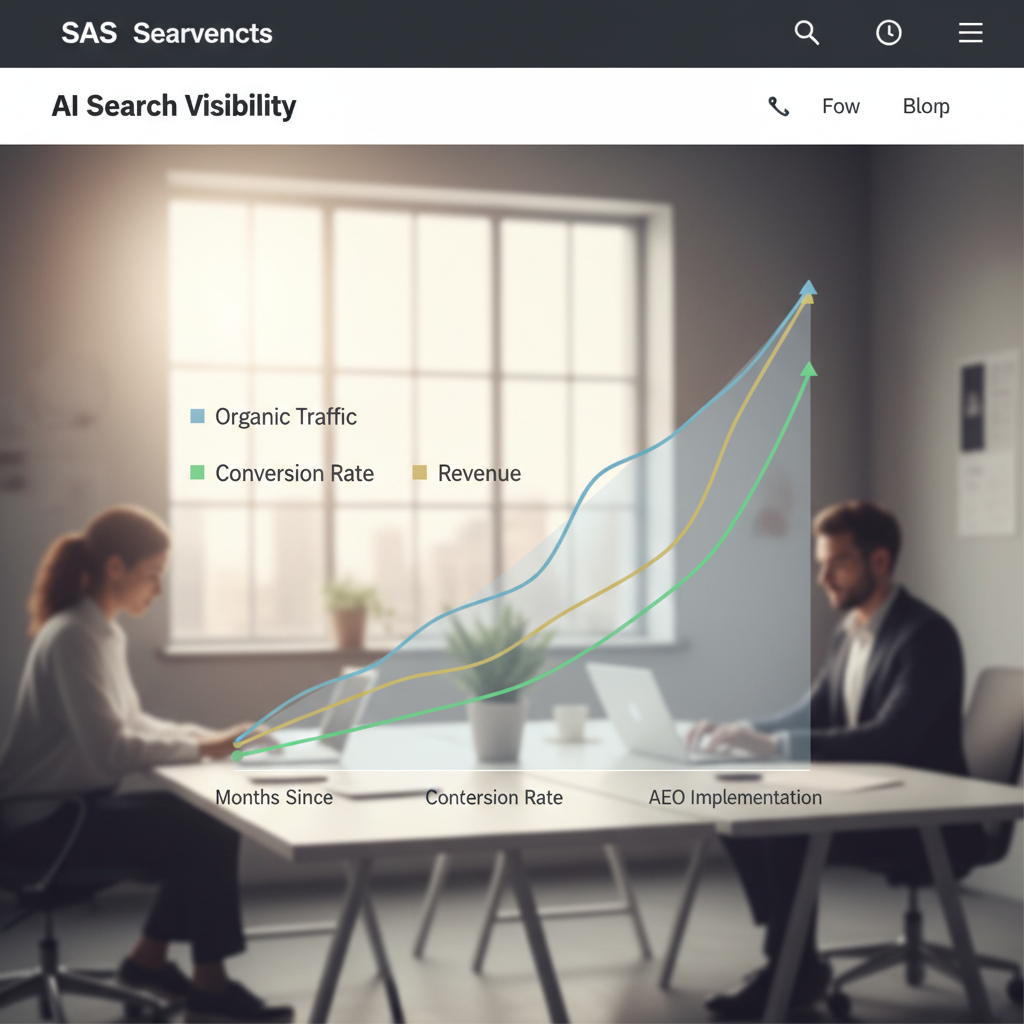
The question we hear most often from marketing directors right now isn't "what is AEO?" They already know. It's: "Is it actually worth our time and budget?" Fair question. AI search is moving fast, the landscape is still maturing, and no one wants to sink resources into a channel that doesn't deliver. So here's our honest, data-grounded take on answer engine optimization ROI and whether it deserves a place in your marketing budget.
What "Return" Actually Looks Like in AI Search
Traditional SEO ROI is relatively straightforward to model. You rank for keywords, you get clicks, you measure sessions and conversions. AEO works differently, and that's where a lot of the confusion around the AEO investment case comes from.
When ChatGPT, Perplexity, or Google's AI Overviews answer a user's query, they cite sources. Those citations drive direct referral traffic, yes, but the bigger value is brand authority. When someone asks an AI model which accounting software is best for mid-market companies and your brand gets mentioned unprompted, you're being positioned as the credible answer before the user even visits your site. That's a form of top-of-funnel influence that's genuinely difficult to replicate through paid channels.
McKinsey's research into the economic potential of generative AI estimates that AI-driven tools could add trillions in productivity value across industries. Search is a significant part of that shift. Brands that establish authority in AI models early are building an asset that compounds over time, much like domain authority did in traditional SEO a decade ago.
The Metrics That Matter
To evaluate AEO benefits properly, you need to track the right things. Not all of them show up in standard analytics dashboards:
Citation frequency: How often your brand or content is referenced by AI models for relevant queries
Share of voice in AI answers: Whether you're appearing more or less than competitors across target topics
Referral traffic from AI platforms: Direct sessions from Perplexity, ChatGPT, and others
Assisted brand search uplift: Increases in branded search volume that correlate with AI citation gains
Content extraction rate: How often your structured content gets surfaced verbatim or paraphrased in AI responses
At Lua Rank, we track all of these across ChatGPT, Perplexity, Google AI Overviews, and Claude. The brands we work with that invest consistently in their AI visibility programmes typically see measurable citation improvements within 60 to 90 days, with some reaching first-page ChatGPT rankings in under 40 days. That's a materially faster feedback loop than most traditional SEO efforts.
AEO vs Traditional SEO ROI: An Honest Comparison
We're not going to tell you AEO replaces traditional SEO. It doesn't, at least not yet. But the comparison is worth making clearly, because the risk profiles and return timelines are genuinely different.
Factor | Traditional SEO | Answer Engine Optimization |
|---|---|---|
Time to first results | 3 to 6 months (typically) | 4 to 10 weeks for citation gains |
Primary return type | Organic clicks and sessions | Brand authority, citations, referral traffic |
Competition level | High, established players dominate | Low to medium, early-mover advantage available |
Measurement maturity | Mature, well-established tooling | Emerging, requires specialist tracking |
Content strategy overlap | Keyword-driven, volume-focused | Answer-driven, authority-focused |
Typical agency cost | $2,000 to $8,000/month | $5,000 to $10,000/month (GEO agencies) |
The cost comparison is where things get interesting. Global search advertising spend continues to rise year on year, and competition for paid and organic positions is only intensifying. AEO, by contrast, is still in its early innings. The brands investing now are establishing positions that will be significantly harder to displace once the space matures.
The Case Against (and Why We Still Back AEO)
A balanced view requires acknowledging the counterarguments. There are legitimate reasons some teams hesitate:
AI models change their citation behaviour regularly, making some gains volatile
Attribution is still imperfect. Correlating AI citations to pipeline isn't always clean
For some industries with very transactional queries, traditional search still drives higher direct conversion
Measurement tooling is younger than in SEO, requiring more manual effort or specialist platforms
These are real considerations, not excuses to dismiss. But here's our counter: every channel looks uncertain before it matures. Brands that waited for SEO to "prove itself" in the early 2000s spent years chasing competitors who'd already built authority. The AEO investment case is partly a timing argument, and the window for early positioning is still open.
How to Structure an AEO Investment That Delivers
The ROI question often comes down less to whether AEO works and more to how it's implemented. A poorly structured programme wastes budget. A well-structured one builds compounding visibility.
Start with a Full Diagnostic
You can't improve what you haven't measured. Before spending anything on content or technical changes, you need to understand where your current AI visibility stands. That means assessing your site across structural, content, and authority dimensions, and benchmarking against the competitors that AI models are already citing in your space.
At Lua Rank, our platform scans websites across 13 optimisation layers and generates a 12-month execution plan with day-by-day task scheduling. That level of structure matters because most teams that start AEO without a roadmap end up doing a few content tweaks and then stalling when they don't see immediate results.
Match Execution to Your Team's Capacity
The brands that see the strongest answer engine optimization ROI from their programmes aren't necessarily the ones with the biggest budgets. They're the ones with consistent, structured execution. Three to five focused hours per week, applied to a clear task calendar, outperforms sporadic bursts of activity every time.
Track Competitors, Not Just Your Own Metrics
AI models have a finite amount of space in any given answer. If you're not being cited, someone else is. Tracking your visibility in isolation gives you an incomplete picture. You need to know whether you're gaining or losing ground relative to the specific brands competing for the same AI real estate.
Harvard Business Review's analysis of how generative AI disrupts creative and knowledge work highlights a recurring pattern: early adopters who integrate AI into core workflows build structural advantages that are difficult for late movers to close. The same logic applies to AI search visibility. The brands appearing in AI answers today are building citation histories and authority signals that reinforce themselves over time.
What Good ROI Looks Like at Different Stages
Expectations need to be calibrated to timeline. Here's a realistic picture:
Weeks 1 to 4: Diagnostic complete, quick-win technical fixes implemented, content audit done
Weeks 5 to 10: First citation gains visible on Perplexity and ChatGPT for long-tail queries
Months 3 to 6: Consistent citation presence across target topics, measurable referral traffic from AI platforms
Months 6 to 12: Authority compounding, competitive displacement, branded search uplift correlating with AI visibility gains
These timelines aren't guaranteed, but they're consistent with what we see across the 40-plus brands currently running programmes on Lua. The ones that treat AEO as a structured programme rather than a one-off project see the best outcomes.
So is answer engine optimization worth the investment? If you're an established business with a marketing team that can dedicate consistent effort to execution, and you're looking at a 12-month horizon rather than next quarter's numbers, the answer is yes. The channel is real, the early-mover advantage is real, and the cost of entry is far lower than most teams assume. The window won't stay open indefinitely.
Frequently Asked Questions
How quickly can we expect to see results from answer engine optimization?
Citation gains on platforms like Perplexity and ChatGPT can appear within four to ten weeks when you address the right structural and content factors quickly. Some brands running structured programmes see first-page ChatGPT rankings in under 40 days. That said, the most meaningful ROI, in terms of consistent share of voice and measurable referral traffic, typically builds between months three and six. AEO rewards consistent execution over time, not one-time fixes.
Is AEO only relevant if we're already doing traditional SEO?
Not necessarily, but there's significant overlap. Many of the content quality and authority signals that help in traditional SEO also matter for AI model citations. If you have an existing SEO programme, extending it into AEO is relatively efficient because you're building on an established content foundation. If you're starting from scratch, AEO is still viable, but you'll want to address both simultaneously rather than treating them as separate disciplines. The structural work tends to benefit both channels.
What's the minimum investment required to run an effective AEO programme?
The answer depends on how you source execution. A full-service GEO agency typically costs $5,000 to $10,000 per month. Running a structured programme through a platform like Lua Rank costs a fraction of that, provided your team can dedicate three to five hours per week to following the guided plan. The investment that matters most isn't just budget. It's the consistency of execution. A modest budget applied consistently to a structured programme will outperform a larger spend applied sporadically without clear direction.
Related articles

What Is Answer Engine Optimization (AEO)?
Louis Lua
Cited Newsletter Issue 9 (April 27th 2026)
Cited newsletter 27 Apr 2026: ChatGPT citation shifts, Perplexity source rotation, and Google AI Overviews trends — with actionable steps for marketers.
Louis Lua