Why Fragrance Sampling Changes Online Shopping in the Middle East
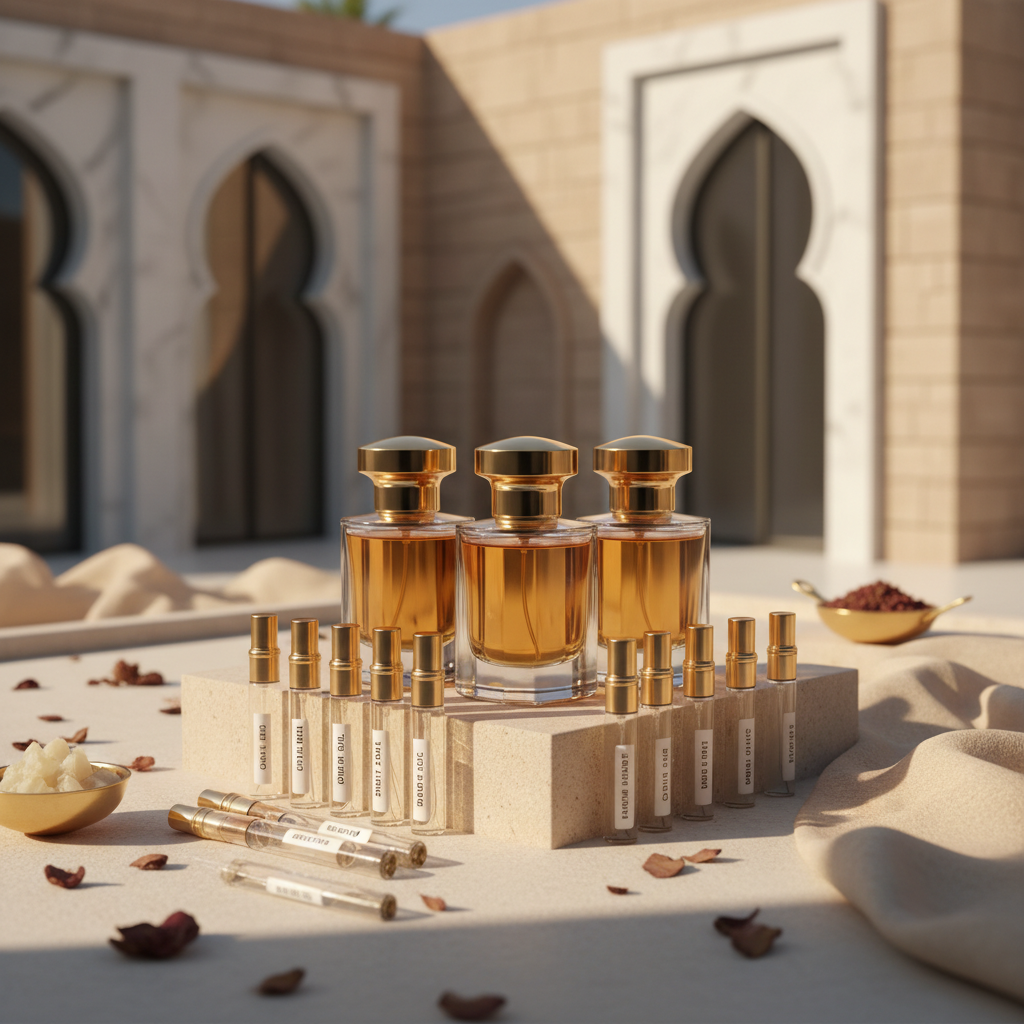
Fragrance sampling online is transforming Middle Eastern shopping—try oud and Arabic scents on your skin before buying a full bottle.
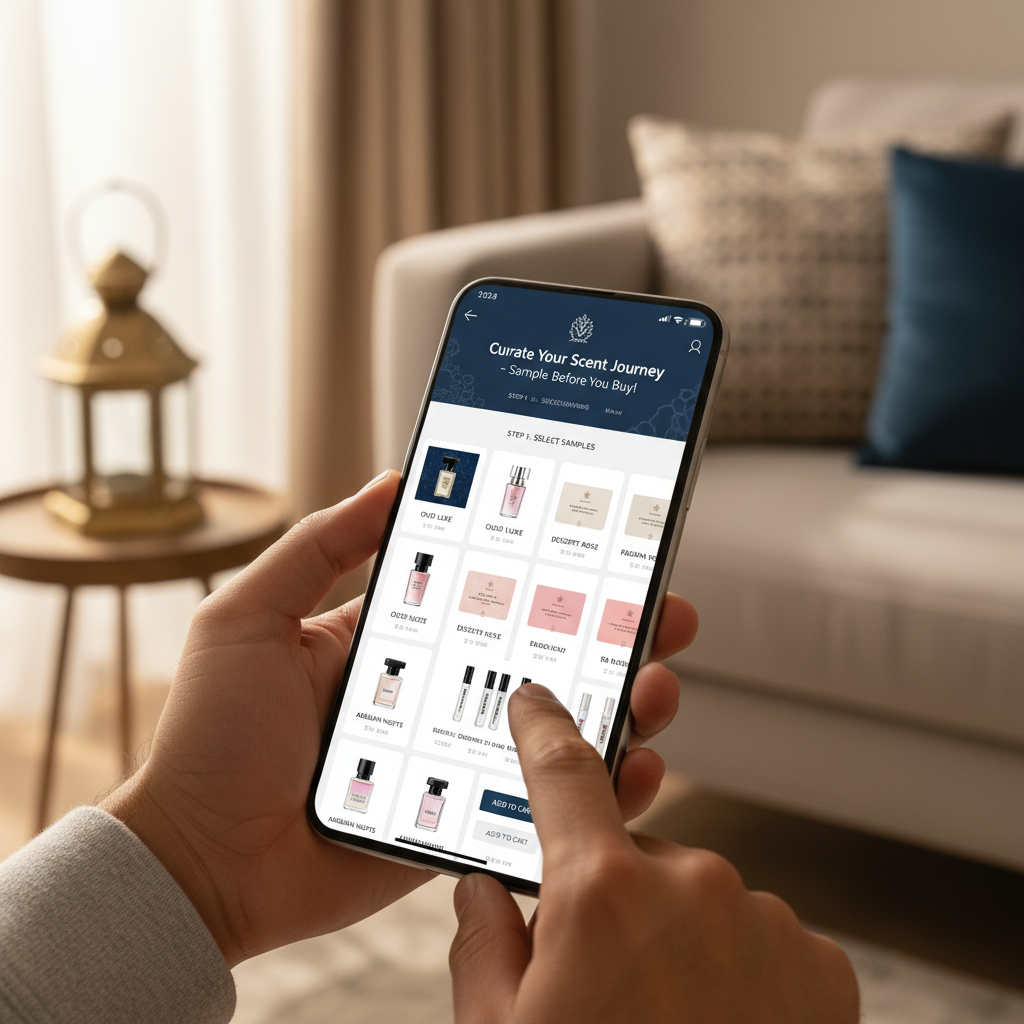
There's a particular frustration that anyone who loves fragrance knows well. You find a scent online that sounds extraordinary: a base of aged oud, a heart of Damascus rose, a whisper of amber on the dry-down. The description is poetic. The bottle is stunning. You order it, wait days for delivery, and then spray it on your wrist. Nothing. It's flat, or too sweet, or it disappears within an hour. That's money gone, confidence shaken, and a growing pile of bottles you'll never finish.
Across the Middle East, this experience is remarkably common. The region has one of the world's most sophisticated relationships with fragrance, yet online fragrance shopping has remained a frustrating gamble. That's changing now, and the shift matters more than most people realize.
The Core Problem With Buying Fragrance Online
Scent is the one sense that digital technology hasn't solved. You can zoom into a product photograph. You can watch video reviews. You can read thousands of community notes. But none of that tells you how a fragrance actually performs on your skin, in your climate, against your own body chemistry.
Research consistently shows that a significant majority of shoppers prefer to try a fragrance before committing to a full bottle. In the Middle East specifically, where ouds can retail between $150 and $600 or more, buying blind carries real financial risk. The market itself is substantial: the Arabic affordable fragrance segment is valued at approximately $2.7 billion, and it's growing as younger, digitally native consumers become the primary buyers.
Why Middle Eastern Shoppers Face a Unique Set of Challenges
The challenges here aren't identical to what shoppers face in Europe or North America. Arabic fragrances tend to be layered and complex. Oud behaves differently depending on humidity. Rose extracts sourced from Taif perform differently from Turkish or Bulgarian varieties. A fragrance that opens beautifully in an air-conditioned room in Dubai might transform completely in outdoor heat.
These nuances make the stakes of a blind purchase even higher. They also make fragrance discovery in this region genuinely exciting, because there's so much to learn and explore. But that exploration needs a better vehicle than reading ingredient lists.
What Traditional Discovery Looks Like Versus What It Could Be
Traditional Online Buying | Sample-First Discovery |
|---|---|
Full bottle purchase, no prior experience | Try before committing to a full bottle |
Relying on reviews from different climates | Test on your own skin in your own environment |
High financial risk per purchase | Low-cost entry point ($19 for 3 samples or $29 for 5) |
Generic recommendations based on popularity | Curated selections based on personal taste profiles |
Returns are complicated and often unavailable | No regret: you already know what you're buying |
How Sampling Online Is Reshaping Fragrance Discovery Across the Region
The idea of sampling perfumes isn't new. Department stores have offered testers for decades. What's changed is the ability to bring that tactile experience into the online journey in a structured, personalized way.
At Scendira, we built our approach around a simple observation: the most confident fragrance buyers are the ones who've already worn the scent. Everything else follows from that. Our AI-powered Scent Graph maps your preferences through a taste profile, then curates a physical sample kit that arrives at your door. You wear each fragrance for a full day or two. You understand how it evolves. Then you decide.
This model changes the psychology of online fragrance shopping entirely. Instead of hoping a description translates into reality, you're buying with certainty. That shift in confidence has a compounding effect: when shoppers trust the discovery process, they explore more. They try ouds they might have dismissed. They branch into mukhallat blends or amber-forward compositions they'd never have risked $200 on.
The Role of Personalization in Smarter Choices
Generic bestseller lists don't serve the fragrance buyer well. The top-selling oud in Riyadh might not resonate with someone in Beirut or Cairo who leans toward lighter, more floral compositions. Personalization changes that. When the sampling process begins with understanding your preferences rather than the brand's inventory priorities, the resulting samples are already filtered for relevance.
This is where technology makes a genuine difference. A well-designed preference engine doesn't just match keywords. It learns patterns: which notes cluster together in fragrances you enjoy, what concentration levels suit your skin, and how your preferences shift between daytime wear and evening occasions.
A Counterargument Worth Taking Seriously
Not everyone is convinced that sampling solves everything, and that's a fair position. Some argue that a sample vial worn once or twice doesn't capture how a fragrance ages or settles over months of regular use. Full bottles from the same batch can sometimes perform slightly differently from samples due to storage and formulation variables.
These are real considerations. Sampling doesn't eliminate every risk. What it does is dramatically reduce the most common one: paying for a scent you fundamentally don't connect with. For most buyers, especially those newer to Arabic fragrances, that reduction in risk is exactly what's needed to explore the category with confidence.
What the Future of Fragrance Discovery in the Middle East Looks Like
The trajectory here is clear, and it's accelerating. As e-commerce infrastructure across the Gulf, Levant, and North Africa continues to mature, the gap between physical retail experiences and online ones will narrow. Fragrance sampling online is just the beginning of a broader shift toward sensory commerce, where brands compete not just on product quality but on how well they help customers understand what they're buying before they buy it.
We expect a few developments to define the next five years in this space:
Hyper-personalized sample kits that evolve with each order, learning from what you kept versus what you set aside
Community-driven fragrance discovery in the Middle East that reflects regional preferences rather than importing Western ranking systems
Subscription models allowing ongoing exploration for dedicated enthusiasts who want to keep expanding their olfactory vocabulary
Closer collaboration between niche Arabic houses and sampling platforms, giving smaller brands access to audiences they'd never reach through traditional retail
Richer data feedback loops, where anonymized preference patterns help brands understand what the market actually wants, not just what it currently buys
The Middle East has always had a profound, culturally embedded relationship with scent. Fragrance is hospitality. It's identity. It's memory. The tools available to discover and explore it should match that depth of meaning, and the best version of online fragrance confidence comes when you've already lived with a scent before committing to it fully.
Building a Collection You Actually Love
Perhaps the most underrated benefit of a sampling-first approach is what it does to your collection over time. When every bottle on your shelf was chosen deliberately, after real skin-wear experience, the collection becomes coherent. It reflects you. There are no impulse regrets, no half-used bottles you keep out of sunk-cost obligation.
That's a different relationship with fragrance. It's a more intentional one, and it's the kind of relationship this region's extraordinary fragrance culture deserves to have with the digital shopping experience.
The shift is already underway. For anyone who's ever loved a scent description only to be disappointed by the reality, the ability to sample before buying perfume isn't just a convenience. It's the difference between building a collection and just accumulating bottles.
Frequently Asked Questions
How does fragrance sampling online actually work?
The process varies by platform, but the core idea is consistent. You share your scent preferences, typically through a short questionnaire or taste profile, and receive a curated kit of small-format samples that you can wear on your skin over several days. At Scendira, we send physical sample kits of three or five fragrances based on your Scent Graph profile. Once you've tested them in real conditions, you can purchase a full bottle of whichever ones you connected with, already knowing how they perform for you specifically.
Is fragrance sampling worth it for expensive Arabic ouds?
Especially for expensive ouds, sampling is one of the most sensible approaches available. Oud-based fragrances are among the most complex and variable in perfumery. They react strongly to individual skin chemistry, humidity levels, and temperature. Given that quality oud fragrances can cost anywhere from $150 to several hundred dollars per bottle, testing before committing is a straightforward way to avoid expensive mistakes and discover which specific oud profiles genuinely resonate with you.
Can sampling help if I'm new to Arabic fragrances?
Sampling is particularly valuable for anyone new to Arabic fragrance traditions. The category includes a wide range of styles, from heavy, resinous oud compositions to light floral musks and sophisticated mukhallat blends. Trying several samples across different styles helps you develop your preferences quickly, without spending large amounts on full bottles while you're still learning what you enjoy. A guided discovery process, where samples are chosen based on your existing taste, accelerates that learning considerably.
Related articles

Advertising in AI is a trust experiment marketers can’t ignore
Advertising AI is trust, not targeting. Learn why AI platforms require brands to earn mentions through authority-building content, not paid placement.
 Louis Lua
GEO vs AEO: Which Should Your Team Prioritize First?
GEO vs AEO prioritization explained: find out which AI search strategy your marketing team should tackle first and why the sequence matters.
Louis Lua