AI Visibility Dashboard: Track How Your Brand Appears Across AI Search Engines
 Guilherme HortinhaCo-Founder of Lua Rank & AI Visibility Strategist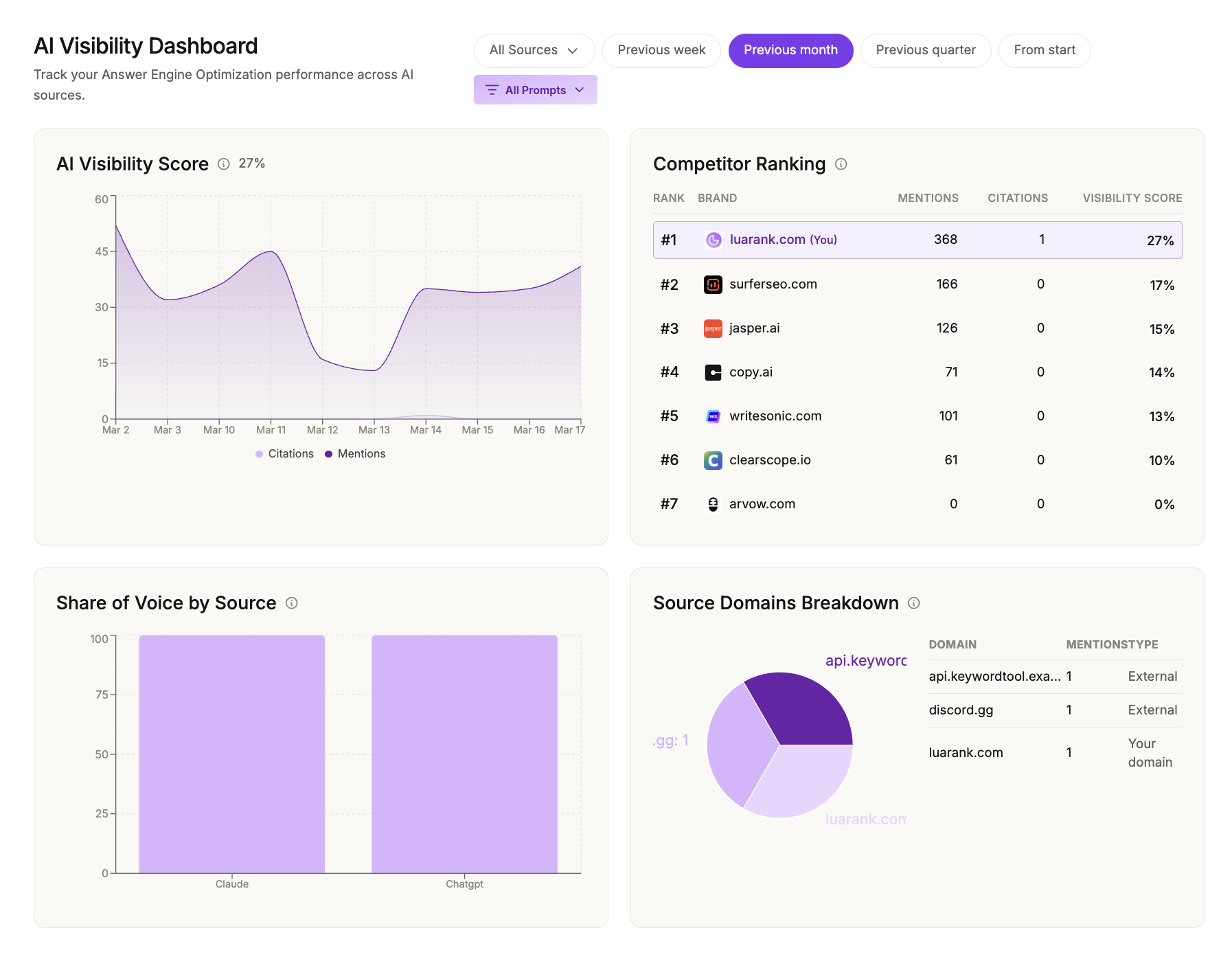
AI search visibility dashboard to monitor your brand across ChatGPT, Perplexity, Google AI Overviews, and Claude with competitor analysis.
Lua Rank's AI Visibility Dashboard tracks how often your brand is mentioned and cited across ChatGPT, Perplexity, Google AI Overviews, and Claude, with competitor rankings, share of voice breakdowns, and source domain analysis for every prompt you are targeting.
You cannot check Google Analytics to see whether ChatGPT mentioned your brand today. When someone asks an AI model a question relevant to your business, you have no way to know whether your brand was mentioned, whether your website was cited as a source, or whether a competitor dominated the response. Most marketing teams are completely blind to their AI search visibility dashboard performance because no native tools exist to track it.
Why traditional analytics miss AI search entirely
AI search is now a discovery channel, but it has no equivalent of Google Search Console. ChatGPT reached 100 million users faster than any platform in history, yet businesses have no visibility into how they appear in AI-generated answers. There is no native way to know if AI models are citing your website, mentioning your competitors instead, or pulling from third-party sources when answering questions about your industry.
Traditional web analytics track visitors who click through to your site, but AI models often provide complete answers without sending users anywhere. When ChatGPT recommends three marketing automation platforms and yours is not mentioned, you lose a prospect and never know it happened. This gap between AI influence and measurement visibility creates a massive blind spot for brands investing in answer engine optimisation.
The AI Visibility Dashboard closes that gap by monitoring your target prompts across multiple AI models and tracking every mention, citation, and competitor appearance over time. We built this because marketing teams need the same measurement clarity for AI search that they have for Google search.
How it works, in 3 steps
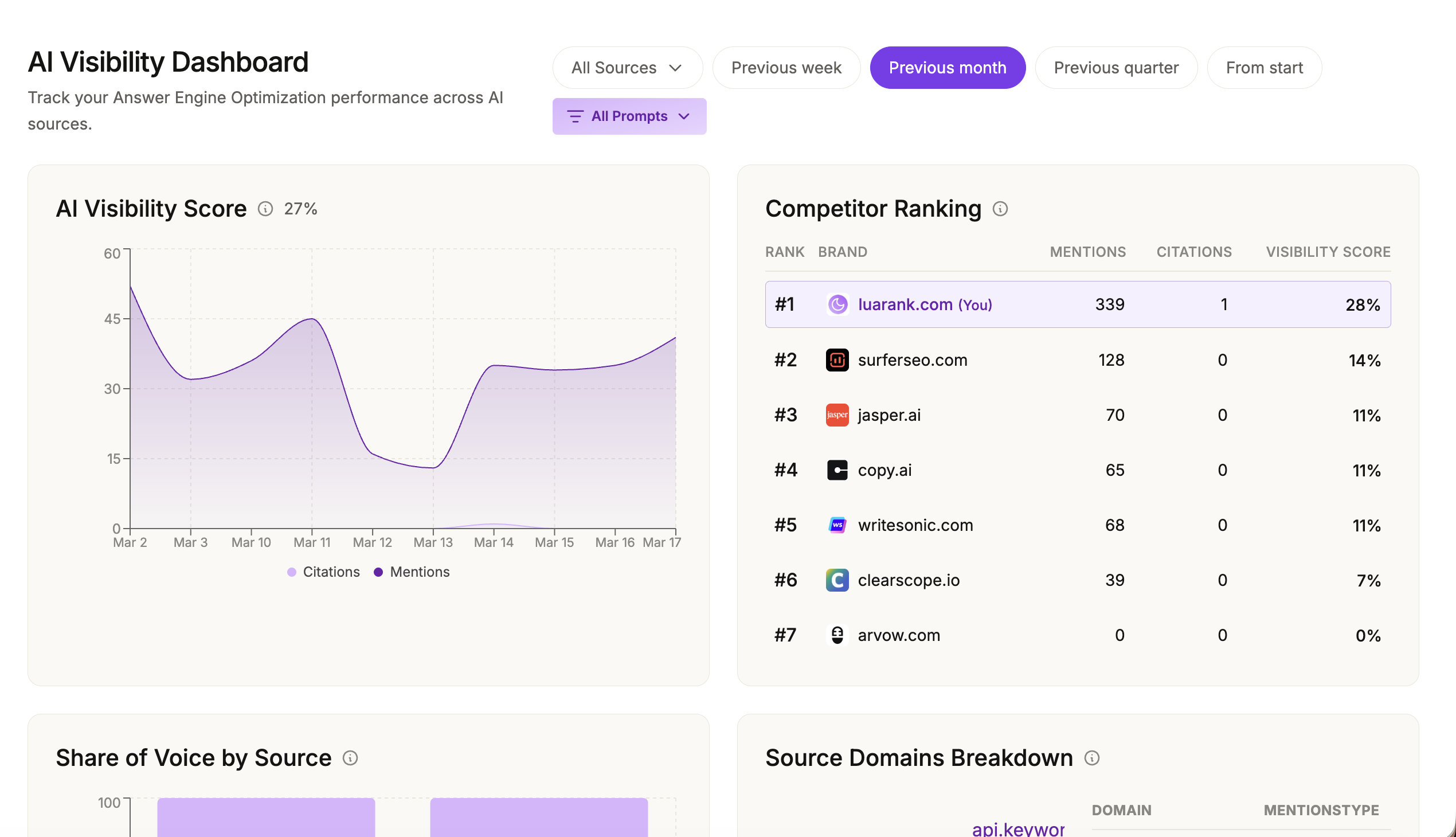
1. Open the dashboard and review your overall score: Your AI Visibility Score appears at the top as a percentage, along with a time-series chart tracking citations and mentions across all your target prompts and AI sources. Use the time filters to zoom into specific periods, from the previous week to your entire tracking history.
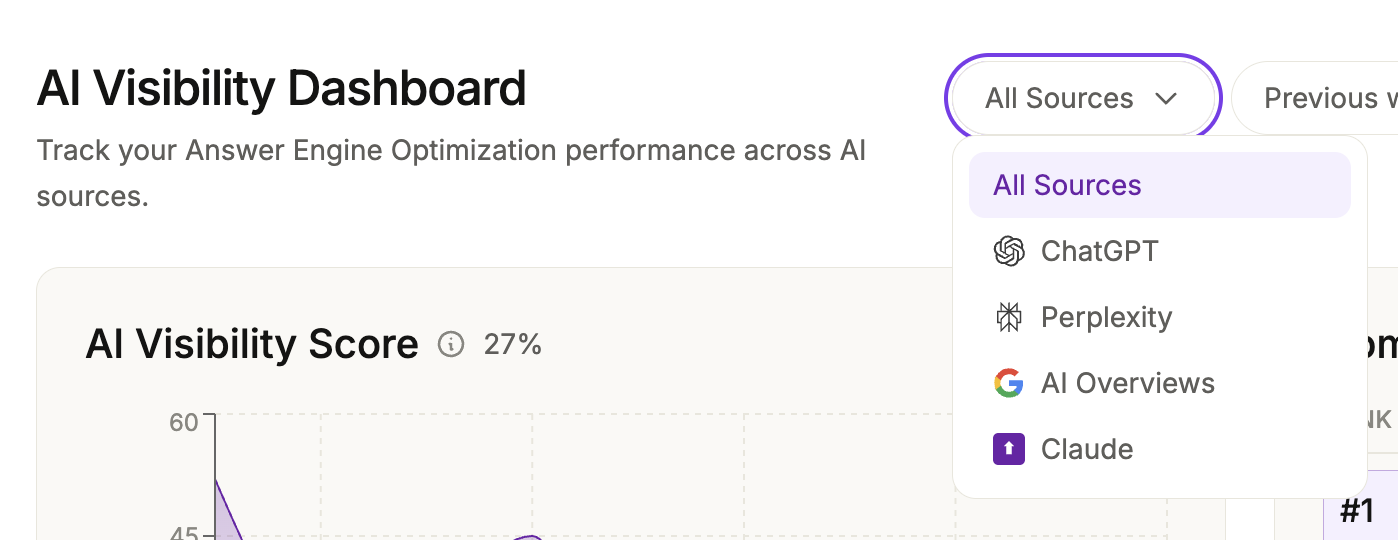
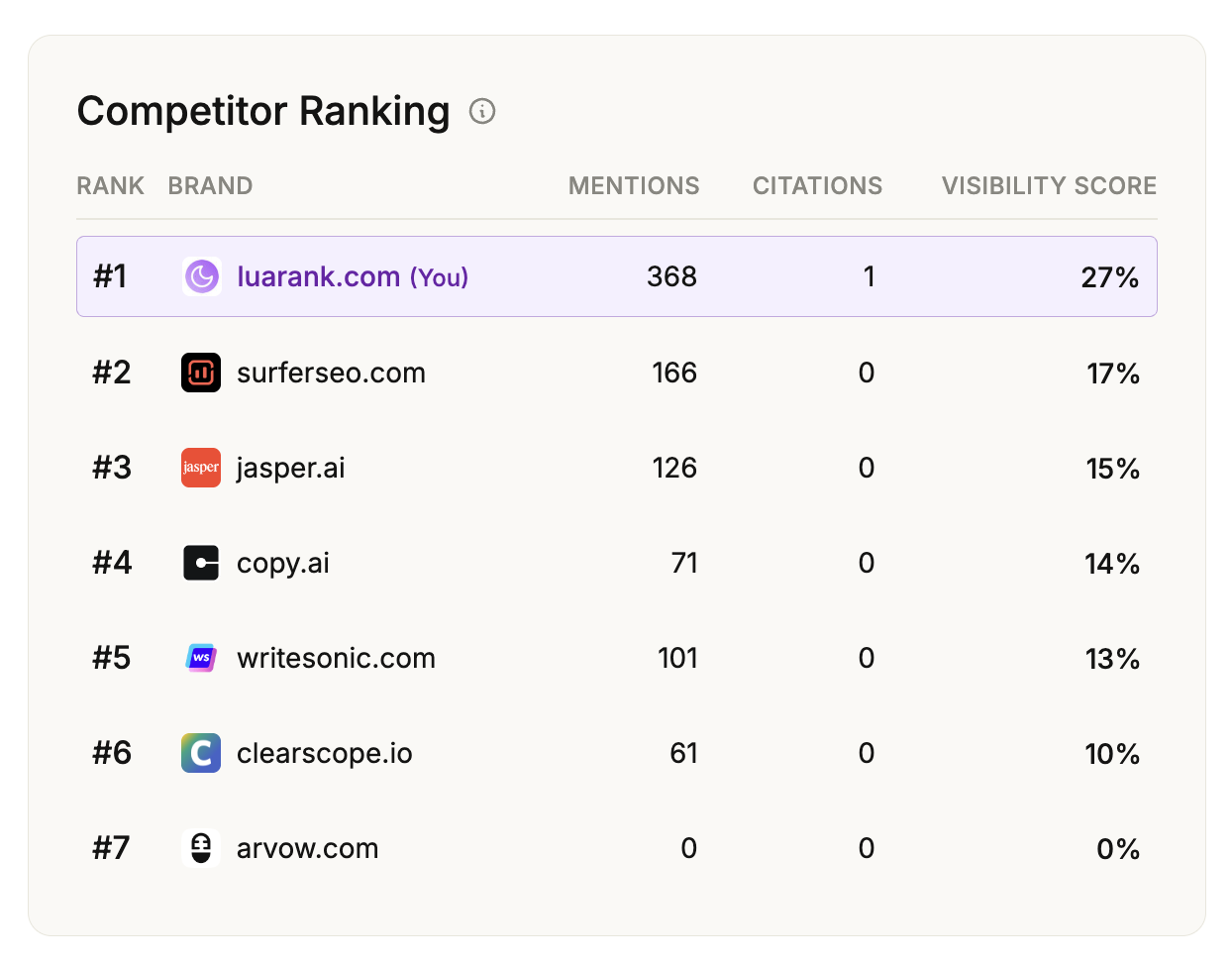
2. Filter by AI source and prompt type: Filter by individual AI platforms (ChatGPT, Perplexity, Google AI Overviews, Claude, or All Sources) and by prompt categories (all prompts, branded prompts, non-branded prompts, or individual prompts) to isolate specific signals. The Competitor Ranking table on the right shows how you rank against competitors by mentions, citations, and overall visibility score.
3. Analyze source attribution and share of voice: Scroll down to the Share of Voice by Source chart to see what proportion of AI responses mention your brand versus competitors, broken down by AI model. The Source Domains Breakdown shows which websites AI is citing when it references your brand, whether that is your own domain, external media, directories, or third-party sources.
At the end of this workflow, you have a complete picture of your AI search presence with the same granularity and competitive context you expect from traditional search analytics.
How teams use this today
Executive reporting: A marketing director checks the Competitor Ranking table weekly to see whether their brand is gaining or losing ground against key competitors in AI search. The visibility score becomes a new metric in monthly board reports alongside traditional search rankings.
Category visibility assessment: An SEO manager filters by non-branded prompts to see if the brand appears for category-level questions, which indicates true organic AI visibility. This data helps prioritize content creation for topics where competitors dominate AI responses.
Platform-specific optimization: An agency filters by individual AI sources to show a client they are visible on ChatGPT but underperforming on Perplexity. They use this insight to prioritize platform-specific optimization work and demonstrate ChatGPT brand visibility improvements over time.
Authority building strategy: A content strategist uses the Source Domains Breakdown to identify which third-party sites AI is citing for their industry, then targets those sites for backlinks or guest content. Lua Rank users see measurable visibility improvements by focusing their outreach on domains that AI models already trust and reference.
What to keep in mind
Mentions and citations are different metrics. A mention means the AI response names your brand without linking to your URL. A citation means AI uses your website as a source with a link, even if your brand name is not explicitly stated. Both contribute to your visibility score, but citations carry more weight because they drive direct traffic.
Visibility scores reflect how AI models responded at the time of monitoring. AI responses can vary between sessions, so the score represents a sampled snapshot over the tracking period. Trends over weeks and months are more meaningful than day-to-day fluctuations.
Frequently asked questions about AI visibility tracking
How often does the dashboard update with new data?
The dashboard updates weekly with fresh monitoring data across all tracked prompts and AI platforms. Recent optimization changes may take 7-10 days to appear in your visibility scores, similar to how traditional search rankings take time to reflect new content or technical improvements.
Can I track competitors who are not direct competitors?
Yes, you can add any brand to your competitor tracking list during setup. Many teams track aspirational competitors or category leaders to benchmark their AI share of voice against the brands they want to compete with, not just their current peer set.
Does this integrate with other Lua Rank features?
The visibility dashboard connects directly to your optimization task list. When you see low visibility for specific prompts, you can click through to see recommended actions from your personalized AI optimization program. This creates a feedback loop between measurement and improvement.
What is the difference between AI search visibility and traditional SEO rankings?
Traditional SEO rankings show where your website appears in a list of search results. AI search visibility measures whether AI models mention or cite your brand when generating direct answers to questions. AI responses often provide complete information without showing a ranked list, making visibility within the generated answer more valuable than traditional position rankings.
The AI Visibility Dashboard answers the question that no other analytics tool can: when people ask AI about your industry, does your brand show up. As AI search continues to grow as a discovery channel, this measurement capability becomes as essential as tracking your Google rankings.
Marketing teams using this dashboard report higher confidence in their AI optimization investments because they can finally measure the channel they are trying to influence.
Related articles
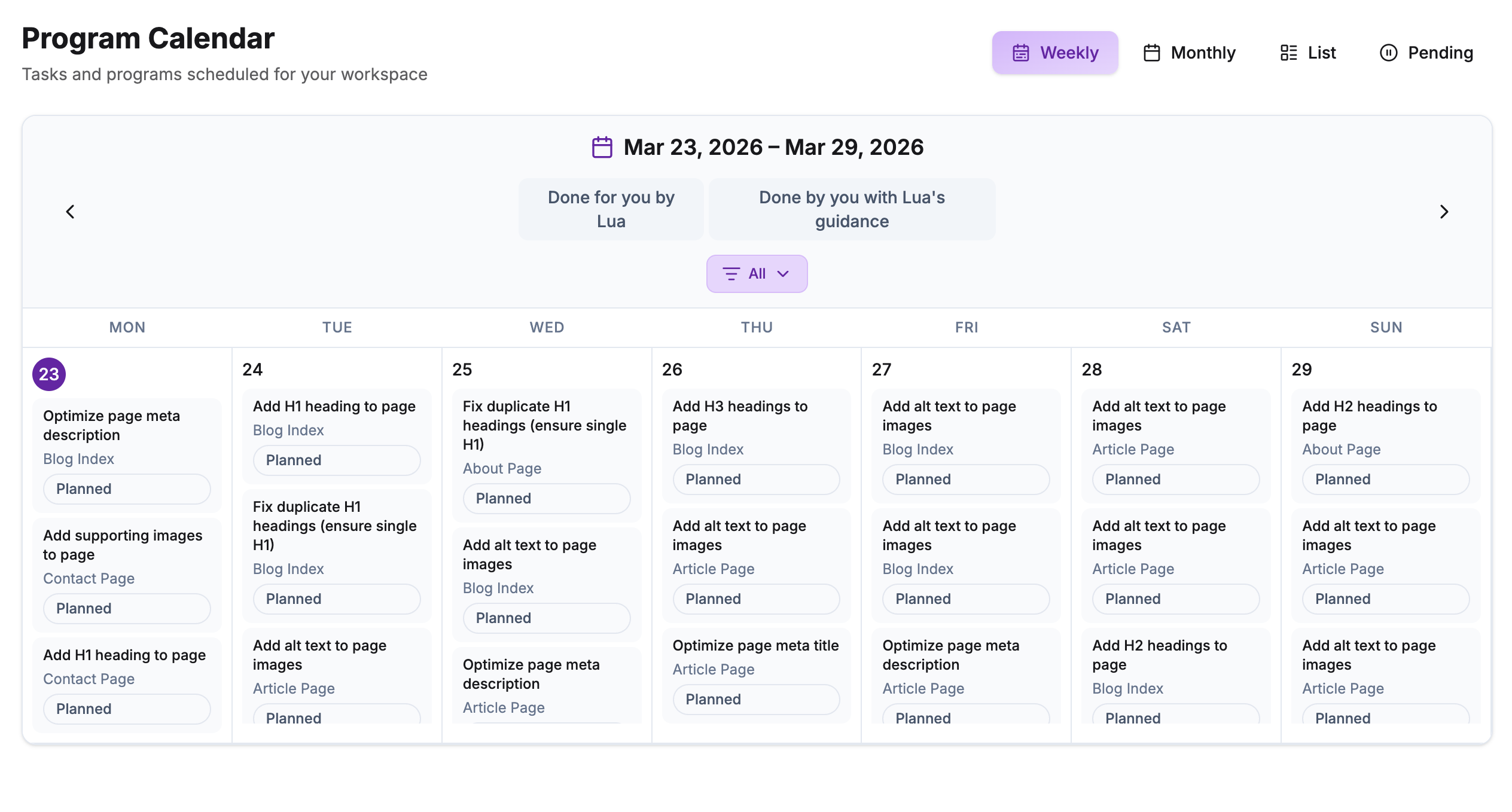
Lua Calendar: Your Day-by-Day AI Visibility Action Plan
Lua Rank's AI visibility program calendar maps your optimization tasks day by day for a full year, telling you exactly what to do and when.
Guilherme Hortinha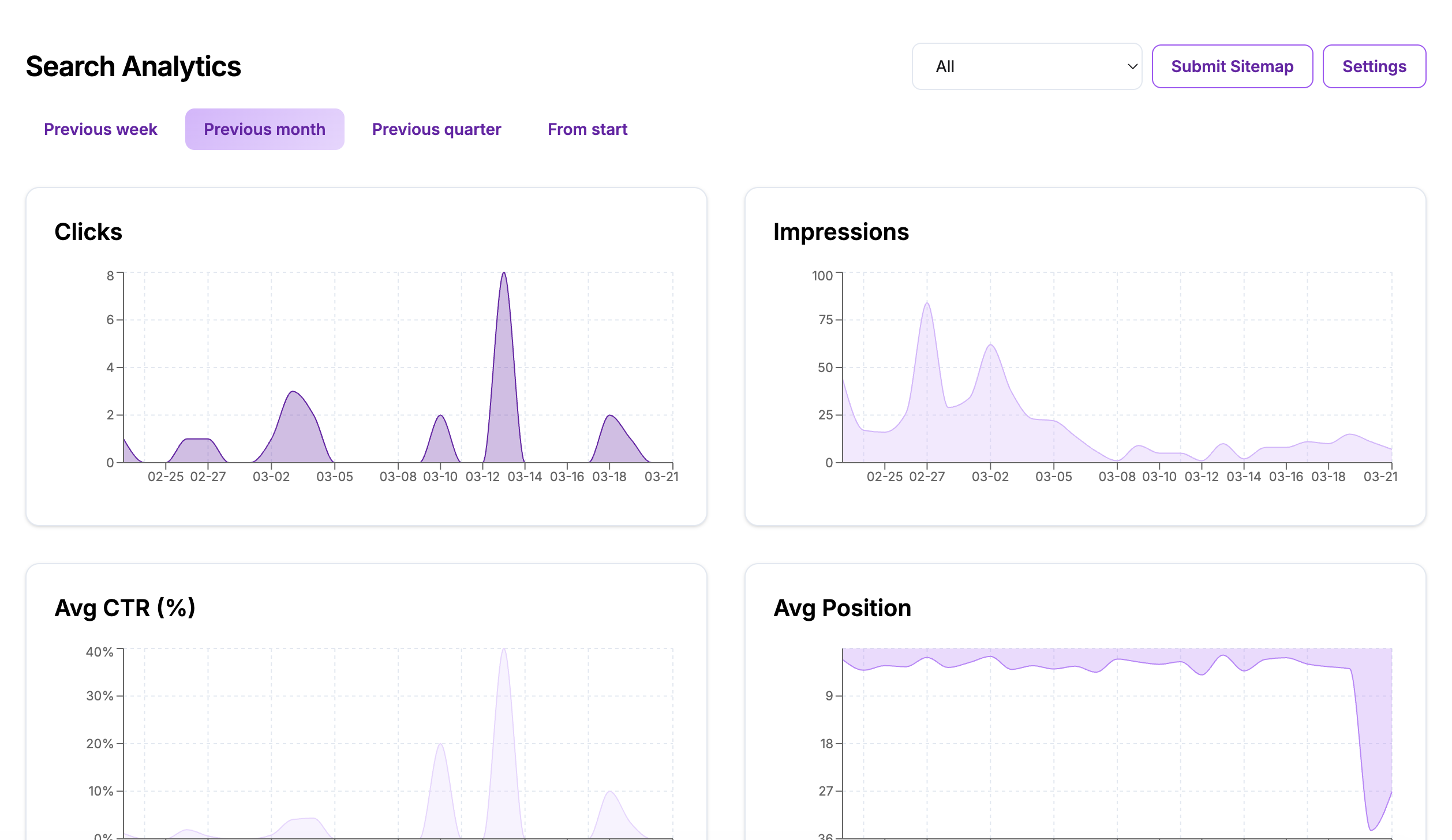
Search Analytics: Monitor Your Google and Bing Performance Inside Lua
Connect Google Search Console and Bing Webmaster Tools to monitor organic clicks, impressions, and rankings in one dashboard alongside AI visibility.
Guilherme Hortinha