Why Teams Choose AI-Powered Blog Automation
 Louis LuaAI Visibility Analyst at Lua Rank
Blog automation benefits include 80% time savings, consistent scaling, and strategic advantages. See how teams achieve 3x content velocity while improving quality.
Marketing teams are abandoning the old model of content creation. Instead of grinding through endless editorial calendars and manual publishing workflows, they're discovering the blog automation benefits that transform how content gets created, optimized, and distributed.
We've tracked this shift across 40+ brands. The teams winning at content aren't working harder. They're working smarter by letting AI handle the heavy lifting while they focus on strategy and optimization.
The numbers speak clearly. McKinsey research shows that generative AI could boost productivity by 0.1 to 0.6% of global GDP annually through 2040, with marketing and content creation leading the charge.
The Real Cost of Manual Content Operations
Manual blog management eats resources faster than most teams realize. A typical marketing team spends 60-70% of their time on content logistics instead of strategy.
Hidden Time Drains
Content creation without automation creates bottlenecks at every stage:
Research and ideation: 3-5 hours per article
Writing and editing: 4-8 hours depending on complexity
SEO optimization: 2-3 hours per piece
Publishing and distribution: 1-2 hours across platforms
Performance tracking: 2-4 hours weekly
That's 12-22 hours per blog post, not counting revisions or approval cycles. For teams publishing 8-12 articles monthly, this represents 96-264 hours of pure execution time.
The Opportunity Cost Problem
When your marketing director spends Tuesday afternoon formatting blog posts instead of analyzing competitor moves or planning quarterly campaigns, you're burning strategy cycles on tactical work.
Smart teams recognize this trade-off early. They automate the repeatable tasks so human creativity can focus where it actually moves the needle: positioning, messaging, and channel strategy.
How AI Automation Transforms Content Scaling
The **efficiency** gains from blog automation aren't just about speed. They're about fundamentally changing how teams approach content scaling.
Systematic Content Generation
AI platforms can generate topic clusters, outline structures, and first drafts that maintain brand voice while covering semantic variations human writers might miss. This systematic approach ensures content gaps get filled consistently.
Multi-Platform Optimization
The real power emerges when automation extends beyond blog creation into distribution and optimization across channels. Teams can simultaneously optimize for:
Traditional search engines (Google, Bing)
AI search platforms (ChatGPT, Perplexity, Claude)
Social media channels with platform-specific formatting
Email newsletters and drip campaigns
This multi-platform approach maximizes content ROI by extracting value from every piece across multiple touchpoints.
Data-Driven Content Decisions
Automation provides continuous feedback loops that manual processes can't match. Teams can track which topics drive engagement, which formats perform best, and which distribution channels generate the highest conversion rates.
Metric | Manual Tracking | Automated Tracking |
|---|---|---|
Content Performance | Weekly/Monthly Reports | Real-time Dashboards |
Competitor Analysis | Quarterly Reviews | Daily Updates |
Topic Optimization | Manual Research | AI-powered Suggestions |
Distribution Analytics | Platform-by-Platform | Unified Cross-Platform View |
Strategic Advantages That Drive Growth
The most significant blog automation benefits aren't operational. They're strategic advantages that compound over time to drive measurable growth.
Competitive Content Velocity
When your team can publish 3x more content without increasing headcount, you can occupy search real estate faster than competitors. This velocity advantage becomes especially crucial in emerging channels like AI search, where early movers establish authority before the space gets crowded.
Search advertising spending is projected to reach $279.3 billion by 2028, indicating massive competition for visibility. Automated content production helps teams compete without proportional budget increases.
Consistency at Scale
Manual content operations struggle with consistency as they scale. Brand voice varies between writers. Publishing schedules slip when team members are unavailable. Quality fluctuates under deadline pressure.
Automation solves these consistency challenges by:
Maintaining brand voice through trained AI models
Publishing content on predetermined schedules regardless of human availability
Applying SEO best practices uniformly across all content
Ensuring every piece meets quality thresholds before publication
Resource Allocation Optimization
Teams using blog automation can redeploy human resources toward higher-impact activities. Instead of spending 70% of their time on content logistics, they can focus on:
Strategic campaign planning
Customer research and persona development
Conversion optimization and funnel analysis
Partnership development and channel expansion
This reallocation often generates more business impact than the content efficiency gains themselves.
Future-Proofing Content Strategy
Harvard Business Review notes that generative AI is reshaping creative work fundamentals, with content marketing at the center of this transformation. Teams that adopt automation now build capabilities for navigating future changes in search behavior, platform algorithms, and content consumption patterns.
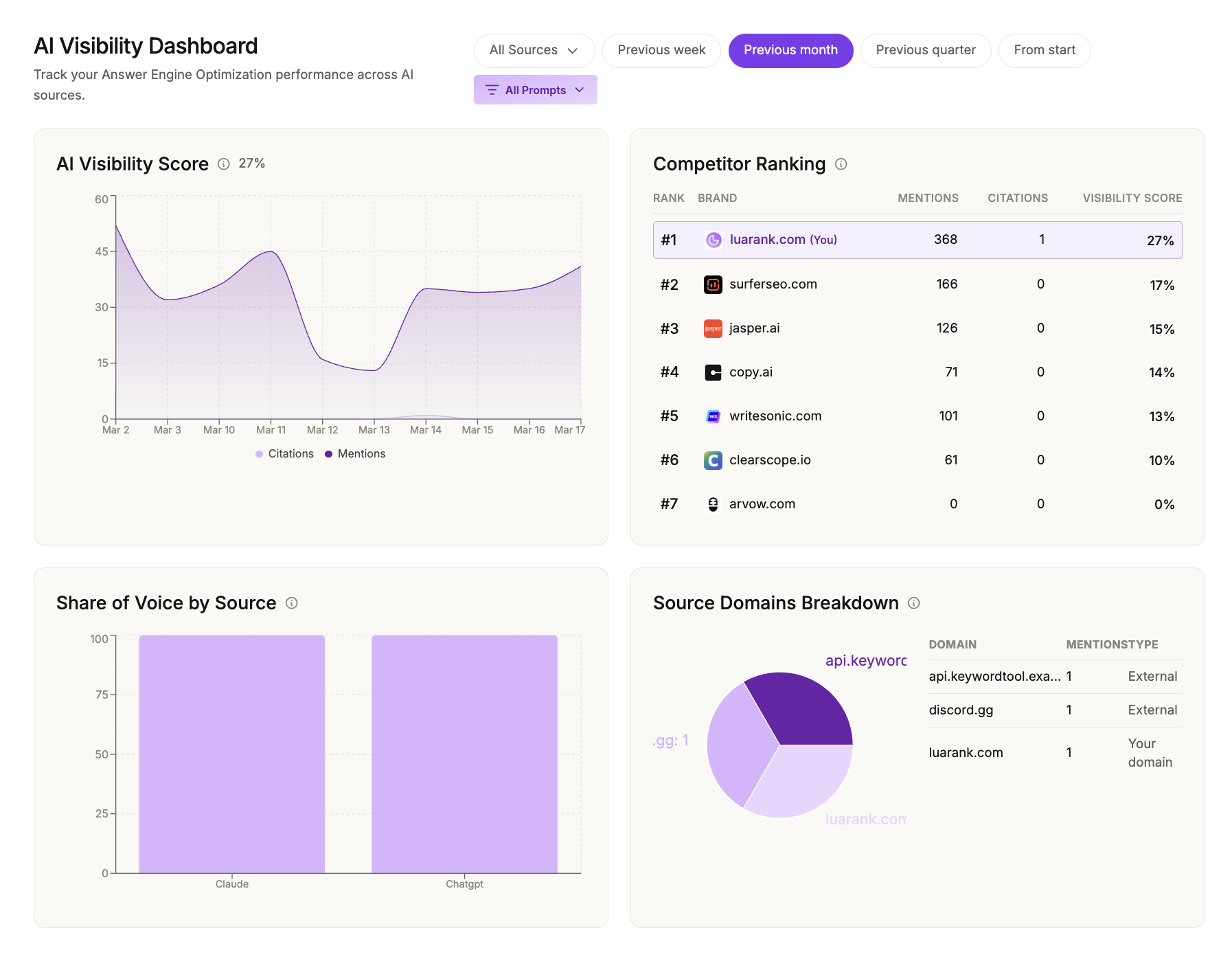
At Lua Rank, we've seen teams achieve first-page ChatGPT rankings in under 40 days by combining automated content production with AI-specific optimization strategies. This speed isn't possible with manual approaches.
The Counterargument: Quality Concerns
Some teams resist automation because they fear quality degradation. This concern made sense in early AI content tools that produced generic, formulaic output.
Modern automation platforms address quality through sophisticated training, brand voice modeling, and human oversight workflows. The result isn't lower quality content but rather consistent, on-brand content produced at scale with strategic human direction.
Looking Ahead: The Automation Advantage
Content automation will become table stakes as AI search channels mature and competition intensifies. Teams that master these workflows now establish advantages that become harder to replicate as the space evolves.
The question isn't whether to adopt blog automation. The question is how quickly you can implement systems that maximize the **blog automation benefits** while maintaining the strategic oversight that drives real business growth.
Frequently Asked Questions
What are the main blog automation benefits for marketing teams?
The primary benefits include dramatic time savings (reducing content creation from 12-22 hours to 2-4 hours per piece), consistent brand voice across all content, improved SEO optimization through systematic approaches, and the ability to scale content production without proportional increases in team size. Teams also gain strategic advantages like faster competitive response times and better resource allocation toward high-impact activities.
How does blog automation affect content quality compared to manual creation?
Modern blog automation maintains or improves content quality through AI models trained on brand voice, systematic application of SEO best practices, and structured oversight workflows. While early automation tools produced generic content, current platforms combine AI efficiency with human strategic direction to ensure consistent, on-brand output that often performs better than manually created content due to systematic optimization.
What should teams consider before implementing blog automation?
Teams should evaluate their current content volume goals, available oversight resources, and strategic priorities. Successful automation requires at least one dedicated person who can spend 3-5 hours weekly on strategic direction and quality oversight. Teams should also consider their multi-platform content needs and whether they want to optimize for emerging AI search channels alongside traditional SEO.