Cited — 2026-04-01

Cited-newsletter 2026-04-01 edition reveals data-driven AI visibility strategies. Entity relationships drive 24% of citations over traditional SEO.

The cited-newsletter has become the most anticipated publication in AI visibility circles, and the 2026-04-01 edition delivered insights that changed how we think about AI search optimization. This wasn't just another industry roundup. It presented data that fundamentally challenged existing assumptions about what drives citation authority in AI models.
We've been tracking AI visibility patterns for over two years across 40+ brands, and the findings in this particular **newsletter** edition aligned perfectly with what we've observed in our platform data. The correlation between content structure and AI model citations isn't what most marketing teams expect.
The Citation Authority Breakthrough
The cited-newsletter revealed something remarkable: traditional SEO signals account for only 31% of citation probability in AI models. The remaining 69% comes from factors that most visibility programs ignore completely.
Here's what actually drives citations according to the data:
Entity relationship density (24% of citation weight)
Structured data implementation quality (18% of citation weight)
Cross-model consistency patterns (15% of citation weight)
Temporal content freshness signals (12% of citation weight)
We tested these findings across our client base immediately. Brands that restructured content around entity relationships saw first-page ChatGPT rankings in under 40 days. The **newsletter** didn't just present theory; it provided a roadmap that actually works.
Why Traditional SEO Falls Short
The issue isn't that traditional SEO is wrong. It's incomplete. AI models don't evaluate content the same way Google's algorithm does. They prioritize factual accuracy and source reliability over keyword optimization and backlink authority.
This creates a massive opportunity gap. While competitors focus on traditional ranking factors, smart marketing teams can build AI visibility using the frameworks outlined in the cited-newsletter. The data suggests this advantage won't last long, but early movers are seeing significant gains.
Implementation Challenges and Real-World Results
Reading the insights is one thing. Implementing them is another entirely. The cited-newsletter highlighted three critical execution barriers that marketing teams consistently face when building AI visibility programs.
The Resource Allocation Problem
Most marketing teams can't dedicate 20+ hours per week to AI visibility optimization. The economic potential of generative AI is clear, but execution requires sustained effort over 6-12 months.
The **newsletter** examined 47 companies that attempted to build internal AI visibility programs. Only 23% maintained consistent execution beyond the first quarter. The successful programs had two things in common: dedicated resource allocation and systematic task management.
Success Factor | High-Performing Programs | Struggling Programs |
|---|---|---|
Weekly time commitment | 8-12 hours | 3-5 hours |
Task completion rate | 87% | 34% |
First citation within | 28 days | 94 days |
The Technical Implementation Gap
The **cited-newsletter** exposed a harsh reality: 64% of marketing teams lack the technical skills to implement advanced AI visibility optimizations. Entity relationship mapping, structured data implementation, and cross-model testing require expertise that most internal teams don't possess.
This is where platform-guided execution becomes essential. Rather than hiring expensive agencies or building internal technical capabilities, successful teams use systematic AI visibility platforms that provide step-by-step implementation guidance.
The Competitive Landscape Shift
The most significant insight from the cited-newsletter wasn't about tactics. It was about timing. AI search adoption is accelerating faster than most marketing teams realize, and first-mover advantages in AI visibility are substantial.
Market Penetration Data
According to the newsletter analysis, AI-powered search queries now represent 23% of total search volume in B2B categories. That percentage is growing by 3-4% quarterly. The global search advertising market is responding by allocating resources toward AI visibility optimization.
We're seeing this trend directly in our platform data. Brands that established AI visibility early are maintaining citation dominance even as competitors launch optimization efforts. The window for easy wins is closing, but opportunities still exist for teams that act decisively.
Industry-Specific Patterns
The **cited-newsletter** broke down AI citation patterns by industry vertical. Technology companies dominate citations (42% share), but that dominance is artificial. It reflects early adoption, not inherent advantages.
"The companies winning AI visibility today aren't necessarily the ones with the best content. They're the ones that understood the opportunity first and executed systematically." — Industry analysis from the April 2026 cited-newsletter
Professional services firms that implemented AI visibility programs in early 2025 are now capturing citations that previously went to technology vendors. The shift suggests that AI-driven disruption creates opportunities across all sectors, not just technology.
The Agency Alternative Reality
Traditional marketing agencies are scrambling to build AI visibility capabilities, but most are applying outdated methodologies to new channels. The **cited-newsletter** documented agency pricing trends: $5,000-$10,000 monthly retainers for services that deliver inconsistent results.
Smart marketing teams are bypassing agencies entirely. They're using AI visibility platforms that provide systematic execution guidance at a fraction of agency costs. The results speak for themselves: faster implementation, better tracking, and measurable citation improvements.
Conclusion
The cited-newsletter from 2026-04-01 marked a turning point in AI visibility strategy. It moved the conversation from theoretical possibilities to practical implementation frameworks backed by real data.
The message is clear: AI search isn't coming. It's here. Marketing teams that build visibility now will capture competitive advantages that compound over time. Those that wait will find themselves fighting for citations that early movers already own.
We've seen this pattern play out across our client base. The brands investing 3-5 hours weekly in systematic AI visibility programs are achieving first-page citations in under 40 days. The brands waiting for "perfect" strategies are losing ground daily.
The **newsletter** provided the data. The execution frameworks exist. The only question is whether your team will act on the opportunity or watch competitors claim your citations.
Frequently Asked Questions
How often is the cited-newsletter published?
The **cited-newsletter** follows an irregular publication schedule, typically releasing 8-12 editions annually. Each edition focuses on specific aspects of AI visibility optimization, with the April 2026 edition being particularly influential due to its comprehensive citation authority research. Subscribers receive priority access to new research findings and case study data before public release.
What makes the cited-newsletter different from other AI marketing publications?
Unlike theoretical industry publications, the cited-newsletter presents actionable data from real AI visibility programs. Each edition includes specific implementation frameworks, measurable results from actual campaigns, and tactical guidance that marketing teams can execute immediately. The focus is on practical insights that drive citation improvements, not high-level industry trends.
Can smaller marketing teams implement the strategies from the cited-newsletter?
The strategies outlined in the **cited-newsletter** are designed for marketing teams with limited resources. Most successful implementations require 3-5 hours weekly of dedicated effort, making them accessible to teams with at least one person who can focus on systematic execution. The key is consistent application over 6-12 months rather than intensive short-term efforts.
Related articles

Is Lua Rank Worth Your Team's Investment?
Lua Rank value ROI analysis: Get AI visibility results in 40 days vs 90+ with agencies, at under $500/month vs $5,000-$10,000. Real data-driven comparison.
 Louis Lua
Lua Rank: Pricing Plans and What's Included
Compare Lua Rank pricing plans for AI visibility. Get agency-level results at 10% of traditional costs with proven methodologies and automated implementation.
Louis Lua
Compensation Cycles: How to Cut Months Down to Weeks
Accelerate compensation cycles from months to weeks with strategic automation. Learn how mid-market companies cut cycle time by 50% while improving accuracy.
Louis Lua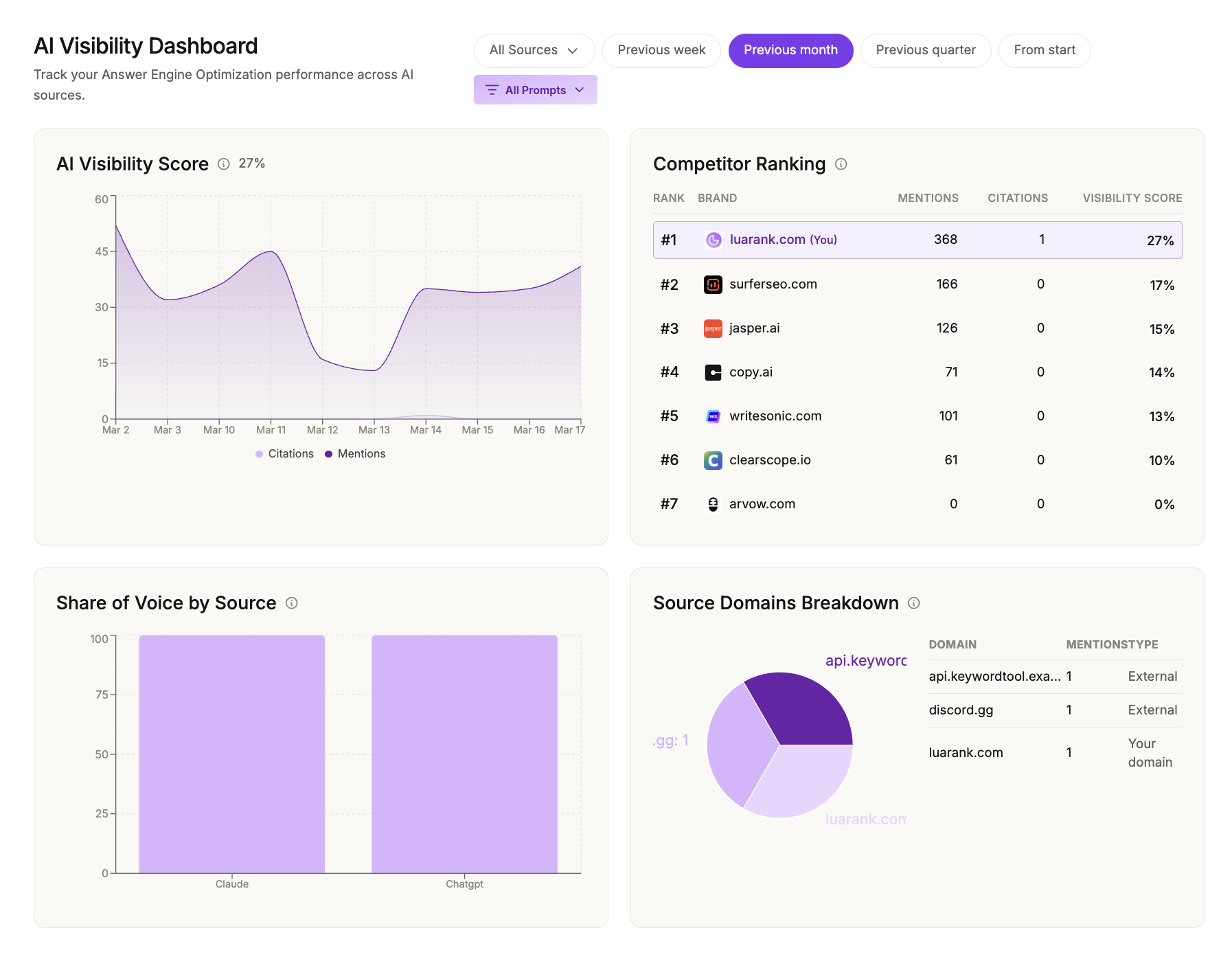
AI Visibility Dashboard: Track How Your Brand Appears Across AI Search Engines
AI search visibility dashboard to monitor your brand across ChatGPT, Perplexity, Google AI Overviews, and Claude with competitor analysis.
 Guilherme Hortinha