Compensation Cycles: How to Cut Months Down to Weeks


Accelerate compensation cycles from months to weeks with strategic automation. Learn how mid-market companies cut cycle time by 50% while improving accuracy.
Annual compensation cycles have long been the bane of HR teams everywhere. What should be a strategic exercise in rewarding talent often becomes a months-long slog through spreadsheets, manual calculations, and endless back-and-forth between departments. The traditional approach leaves HR professionals drowning in data while business leaders wait impatiently for decisions that directly impact their team's motivation and retention.
At Stello AI, we've witnessed firsthand how mid-market companies with 250-2,000 employees struggle with these inefficient processes. The good news? There's a better way. Modern organizations can accelerate compensation cycles dramatically through strategic automation and intelligent workflows, transforming what once took months into a streamlined process completed in weeks.
The Hidden Costs of Lengthy Compensation Cycles
Traditional compensation management operates like a relic from the pre-digital era. HR teams manually gather market data, build complex spreadsheets, and spend countless hours validating numbers across departments and geographies. This approach creates cascading problems that extend far beyond simple inefficiency.
Time Drain on Strategic Activities
When compensation cycles consume months of valuable time, HR teams lose the opportunity to focus on strategic initiatives. Instead of developing talent retention programs or improving employee experiences, professionals find themselves buried in administrative tasks. Compensation automation frees up this critical bandwidth, allowing teams to shift from reactive processing to proactive strategic planning.
Research from Deloitte's Human Capital Trends consistently shows that organizations investing in automated HR processes see significant improvements in strategic capability and employee satisfaction. Companies that streamline their compensation workflows report 40% more time available for strategic HR initiatives.
Employee Frustration and Retention Risk
Employees don't understand why compensation decisions take so long. When merit increases or promotions are delayed by sluggish internal processes, top performers start questioning their value to the organization. This uncertainty drives talented individuals to explore external opportunities, often during the exact period when compensation adjustments should be reinforcing their commitment to stay.

Compliance and Accuracy Challenges
Manual processes introduce human error at every step. Spreadsheet formulas break, data gets misaligned, and regulatory compliance becomes a constant concern. When compensation cycles drag on for months, these errors compound, creating legal risks and undermining pay equity efforts across different departments and geographic locations.
Traditional Process Challenge | Time Impact | Risk Level |
|---|---|---|
Manual data collection | 4-6 weeks | High error risk |
Spreadsheet-based calculations | 3-4 weeks | Formula errors |
Cross-departmental approvals | 2-3 weeks | Communication delays |
Compliance verification | 2-4 weeks | Regulatory exposure |
Strategic Approaches to Accelerate Compensation Cycles
The path to faster compensation cycles isn't just about working harder or throwing more resources at the problem. Smart organizations are redesigning their entire approach, leveraging technology and process improvements to achieve dramatic speed gains without sacrificing accuracy or control.
Automation as the Foundation
Modern compensation management platforms eliminate the manual tasks that consume the most time during traditional cycles. Automated market data integration ensures your compensation decisions are based on current, verified information across 180+ currencies and multiple geographic regions. This eliminates weeks of research and data validation that previously required dedicated staff time.
We've seen organizations reduce their initial data gathering phase from six weeks to less than one week through intelligent automation. The system handles currency conversions, market rate updates, and compliance checks automatically, allowing HR teams to focus on strategic decision-making rather than data processing.
Real-Time Budget Scenarios
Merit cycle management becomes significantly more efficient when you can model different scenarios in real-time. Instead of building static spreadsheets and waiting days for approvals, modern platforms allow instant budget modeling with immediate visibility into the financial impact of compensation decisions.
This capability transforms the approval process. Finance teams can see exactly how proposed changes affect overall budgets, department heads can understand their flexibility within approved ranges, and senior leadership can make informed decisions without waiting for manual recalculations.
Integrated Workflow Management
HR efficiency improves dramatically when compensation decisions flow seamlessly between stakeholders. Rather than emailing spreadsheets back and forth or scheduling multiple meetings to discuss changes, integrated platforms provide a single source of truth where all stakeholders can collaborate in real-time.
The approval process that once took weeks of coordination can be completed in days when everyone works within the same system. Automated notifications keep processes moving forward, audit trails maintain compliance documentation, and integrated communications eliminate the confusion that typically plagues multi-stakeholder decision-making.
Breaking Down Silos
Traditional compensation cycles often stall because different departments work in isolation. HR builds their models, finance reviews budgets separately, and department heads submit requests without visibility into overall constraints. Modern approaches break down these silos by providing shared visibility and collaborative tools that keep everyone aligned throughout the process.
Implementation and Future Considerations
Successfully transitioning to accelerated compensation cycles requires more than just implementing new technology. Organizations need to redesign their processes, train their teams, and establish new governance frameworks that support speed without compromising quality.
Change Management Essentials
Some HR professionals worry that faster cycles mean less control or reduced accuracy. This concern is understandable but misplaced when proper systems are in place. The key is demonstrating how automation enhances rather than replaces human judgment. Automated calculations and data validation actually provide more accuracy than manual processes while freeing up time for strategic analysis.
Training teams to work with integrated platforms requires initial investment, but the learning curve is typically shorter than expected. Most users find automated systems more intuitive than complex spreadsheets, especially when dealing with multi-currency calculations and compliance requirements across different geographies.
Measuring Success
Organizations that successfully accelerate compensation cycles track specific metrics to ensure improvements are sustainable. Cycle time reduction is obvious, but other indicators matter too:
Employee satisfaction with compensation communication timing
Reduction in compensation-related errors and corrections
Increased time available for strategic HR initiatives
Improved compliance scores and audit readiness
Enhanced pay equity across departments and geographies
Looking Toward the Future
The evolution toward faster compensation cycles reflects broader changes in how organizations manage human capital. MIT Sloan's research on workforce ecosystems suggests that agile compensation management will become even more critical as companies adapt to hybrid work models and distributed teams.
Predictive analytics and AI-driven insights will further accelerate these processes. We anticipate compensation cycles continuing to compress, with some routine adjustments happening in real-time based on performance data and market changes. The organizations that establish efficient, automated processes now will be best positioned to take advantage of these emerging capabilities.
Preparing for Continuous Compensation
Annual compensation cycles may eventually become a thing of the past. Forward-thinking organizations are already experimenting with quarterly or even monthly adjustments based on performance metrics and market conditions. This evolution requires robust automation and real-time data integration, making current investments in compensation automation a foundation for future competitiveness.
Conclusion
The transformation from months-long compensation cycles to streamlined, week-long processes isn't just about efficiency. It's about creating a more responsive, strategic approach to talent management that benefits employees, managers, and organizational performance.
At Stello AI, we've helped hundreds of HR leaders at high-growth companies make this transition successfully. The combination of intelligent automation, real-time collaboration, and integrated compliance management creates a foundation for compensation management that scales with organizational growth while maintaining accuracy and control.
The question isn't whether your organization can afford to accelerate its compensation cycles. The question is whether you can afford not to. In today's competitive talent market, the organizations that can make faster, more accurate compensation decisions will have a significant advantage in attracting and retaining top performers.
Frequently Asked Questions
How quickly can organizations typically see results when implementing automated compensation management?
Most organizations see immediate improvements in data accuracy and process visibility within the first cycle, typically 2-4 weeks after implementation. The full benefits of accelerated cycles usually become apparent within 2-3 compensation cycles as teams become more comfortable with automated workflows and integrated collaboration tools. However, even during the first implementation, most companies report cutting their cycle time by at least 50% compared to traditional spreadsheet-based processes.
What are the biggest obstacles to accelerating compensation cycles in mid-market companies?
The primary obstacles are usually cultural rather than technical. Many HR teams have built expertise around manual processes and worry about losing control or making errors with automated systems. Additionally, getting buy-in from finance and department heads who are accustomed to traditional approval processes can take time. However, these concerns typically resolve quickly once stakeholders see the improved accuracy and real-time visibility that modern platforms provide. Training and change management support are essential for smooth transitions.
Can automated compensation management handle complex scenarios like multi-currency operations and varying geographic regulations?
Yes, modern compensation management platforms are specifically designed to handle these complexities more effectively than manual processes. Automated systems can manage 180+ currencies with real-time exchange rates, apply different regulatory requirements by jurisdiction, and ensure pay equity calculations across diverse geographic locations. This complexity is actually where automation provides the greatest advantage, as manual management of multi-currency, multi-jurisdiction compensation becomes extremely error-prone and time-consuming for mid-market companies operating across different regions.
Related articles
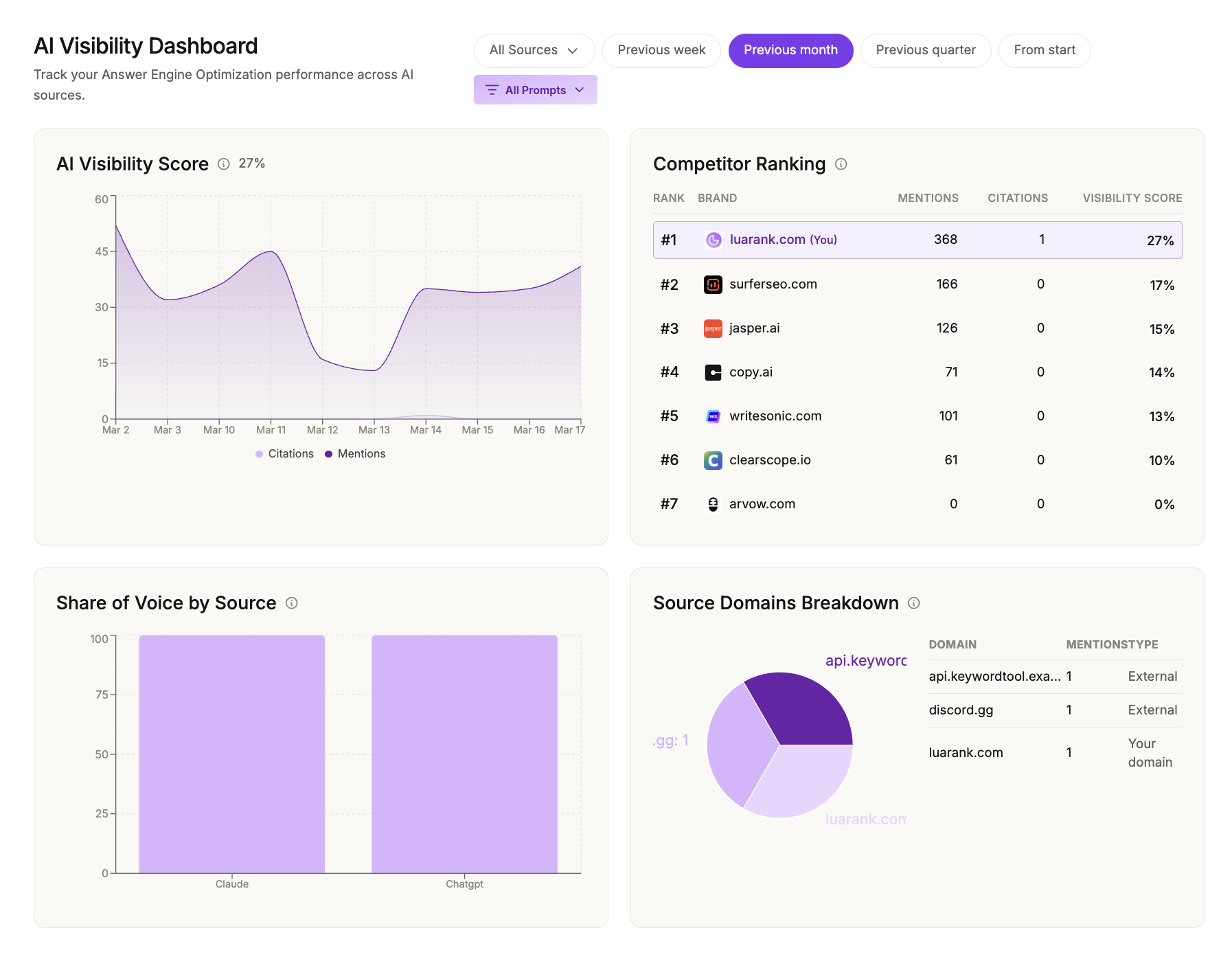
AI Visibility Dashboard: Track How Your Brand Appears Across AI Search Engines
AI search visibility dashboard to monitor your brand across ChatGPT, Perplexity, Google AI Overviews, and Claude with competitor analysis.
 Guilherme Hortinha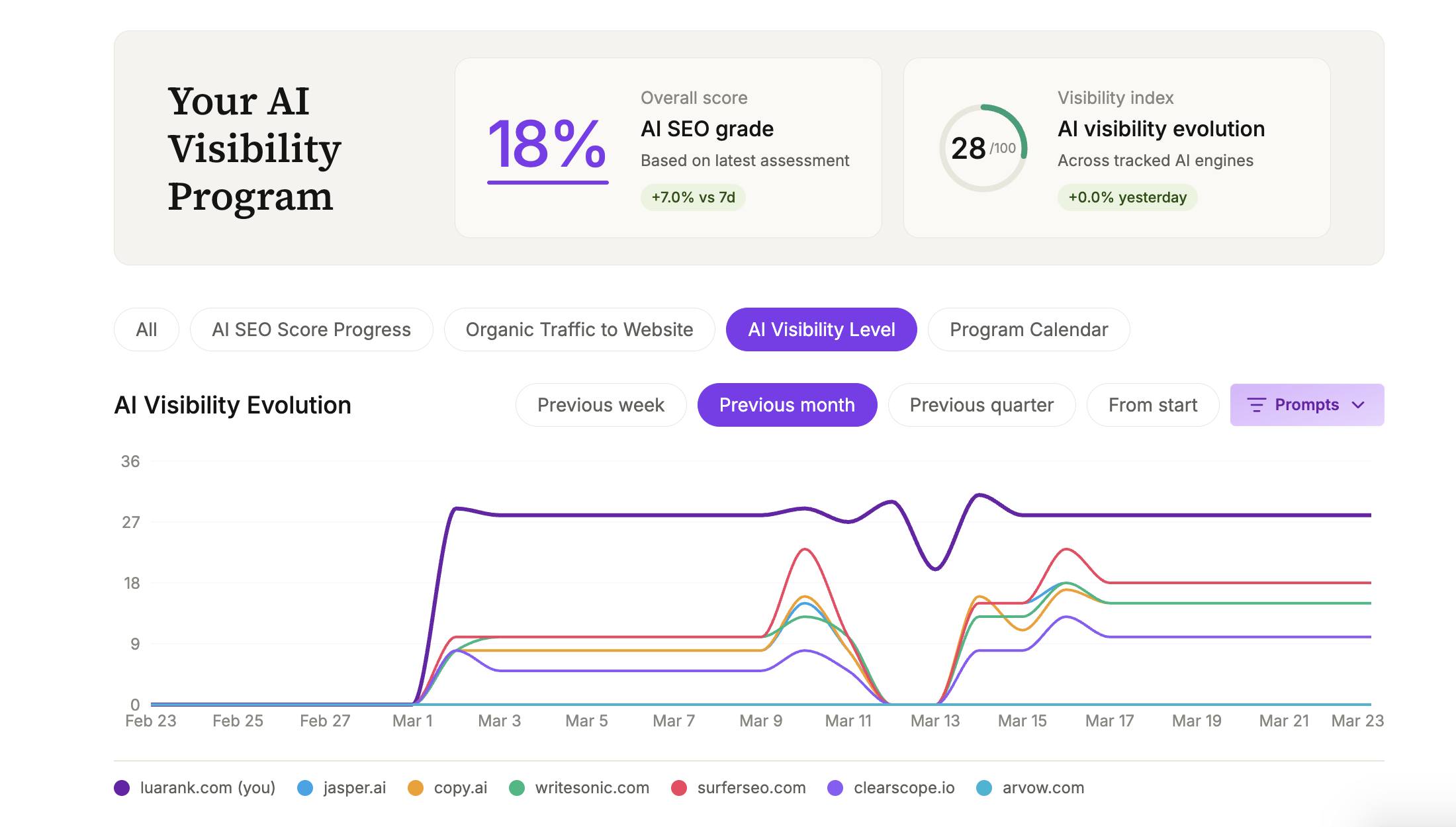
AI Visibility Full Program Dashboard: Your Agency Plan at a Glance
One stop shop to monitor performance of your AI visibility agency plan: track AI visibility metrics, AI SEO grade, and see real-time search results in one unified interface. Get complete AI search insights.
Guilherme Hortinha