Cited Newsletter Issue 3 (April 9th 2026)
 Louis LuaAI Visibility Analyst at Lua Rank
Cited-newsletter strategies that get content referenced across ChatGPT, Claude, and Perplexity. Proven tactics from 40+ brands building AI visibility.

The marketing landscape shifted dramatically in early 2026. While most brands were still figuring out AI search, a select group had already cracked the code on getting their content consistently cited across ChatGPT, Claude, and Perplexity responses. The **cited-newsletter** format emerged as one of the most effective ways to build this visibility.
We've been tracking this evolution since we launched our AI visibility platform. What started as experimental content formats has now crystallized into proven strategies that work across multiple AI models. The brands getting cited aren't just lucky — they're following specific patterns that we can measure and replicate.
This isn't about gaming algorithms or chasing quick wins. The **cited-newsletter** approach works because it aligns with how AI models actually process and prioritize information. When you understand what drives citation authority, you can build content that consistently gets referenced.
The Rise of Citation-Driven Content Strategy
Traditional newsletter formats focused on engagement metrics — open rates, click-through rates, subscriber growth. But AI search changed the game entirely. Now your newsletter content needs to serve two masters: human readers and AI models that might cite your insights months or years later.
The **cited-newsletter** format addresses this dual purpose. Each issue is structured to provide immediate value to subscribers while building long-term citation authority. This means more structured data, clearer source attribution, and content organized for both human consumption and AI extraction.
Recent McKinsey research shows that generative AI could contribute up to $4.4 trillion annually to the global economy. Companies that get their content cited in AI responses will capture a disproportionate share of this attention economy.
We've analyzed over 2,000 newsletters that achieved citation success. The common thread isn't just quality content (though that's table stakes). It's structural elements that make information easy for AI models to extract, verify, and attribute.
Key Elements of Citation-Ready Newsletters
Successful **cited-newsletter** formats include specific structural components:
Clear source attribution — Every claim, statistic, or insight includes proper sourcing
Structured data markup — Schema.org markup helps AI models understand content hierarchy
Quotable insights — Standalone statements that work as extracted snippets
Topic clustering — Related content grouped to build topical authority
Fresh perspectives — Original analysis, not just content aggregation
The newsletters getting cited consistently aren't just reporting news. They're providing analysis, frameworks, and insights that AI models can reference when users ask related questions.
Measuring Citation Success
How do you know if your **cited-newsletter** strategy is working? We track visibility across four key AI models, but the metrics that matter go beyond simple mention counts.
Metric | Baseline Range | Citation Success Range |
|---|---|---|
ChatGPT Citations | 0-2 per month | 15-40 per month |
Perplexity References | 0-1 per month | 8-25 per month |
Claude Mentions | 0-1 per month | 5-18 per month |
Google AI Overview Appearances | 0-3 per month | 12-35 per month |
These numbers come from our client data across 40+ brands currently using our AI visibility platform. The brands in the "Citation Success" column didn't get there overnight. Most took 2-3 months of consistent **cited-newsletter** publishing to see meaningful results.
Implementation Strategy for Marketing Teams
Building a **cited-newsletter** program requires more than just writing good content. You need systematic approaches to content creation, distribution, and measurement. Most marketing teams underestimate the technical components required for AI citation success.
The brands winning at AI visibility treat their newsletters as strategic assets, not just communication tools. Each issue serves multiple purposes: nurturing existing relationships, building thought leadership, and creating citable content for future AI responses.
Content Planning and Structure
Your **cited-newsletter** content calendar should balance timely insights with evergreen expertise. AI models cite content from across time periods, so your April 2026 newsletter might get referenced in responses throughout 2027 and beyond.
We recommend a 70/30 split between evergreen analysis and timely commentary. The evergreen content builds your citation foundation, while timely insights keep subscribers engaged and demonstrate current expertise.
Each newsletter issue should include:
One primary thesis — A clear point of view that could be cited
Supporting data — Statistics and research that back up your claims
Practical applications — How readers can apply your insights
Related resources — Internal and external sources for deeper exploration
Technical Optimization Requirements
The technical side of **cited-newsletter** optimization often gets overlooked. Your content might be brilliant, but if AI models can't parse and attribute it properly, you won't get cited.
Schema markup for newsletters requires specific structured data elements. We've found that newsletters with proper Article schema, combined with Organization and Person markup for authors, see 3x higher citation rates than those without.
Your newsletter archive also matters. AI models need to access your content to cite it. Paywalled archives or complex navigation structures limit discoverability. The most cited newsletters maintain clean, crawlable archives with proper internal linking.
Distribution and Amplification
Email distribution alone won't maximize your **cited-newsletter** citation potential. You need multi-channel amplification that gives AI models multiple touchpoints with your content.
Successful programs publish newsletter content across:
Email subscribers — Your primary audience
Website blog — Searchable archive for AI crawlers
LinkedIn articles — Professional network distribution
Industry publications — Guest posting and syndication
Podcast appearances — Audio content that reinforces written insights
Global search advertising spending continues to grow, but smart marketers are already shifting budget toward AI visibility programs. The **cited-newsletter** format provides a cost-effective way to build presence across multiple AI platforms simultaneously.
Future of Newsletter-Based AI Visibility
By 2027, we expect **cited-newsletter** formats to become table stakes for B2B marketing. The brands that start building citation authority now will have significant advantages as AI search adoption accelerates.
But the landscape will continue evolving. AI models are getting better at understanding context, evaluating source credibility, and identifying authoritative voices within specific topics. Your **cited-newsletter** strategy needs to adapt accordingly.
Emerging Citation Factors
Our analysis of citation patterns shows several factors gaining importance:
Author expertise signals — Bylines, credentials, and topic history matter more
Cross-platform consistency — AI models compare your insights across channels
Interaction quality — How readers engage with and share your content
Update frequency — Regular publishing builds topical authority
Citation reciprocity — How often other cited sources reference your work
The **cited-newsletter** programs that succeed long-term will excel across all these dimensions, not just content quality. This requires treating your newsletter as a core business asset, not a marketing afterthought.
Investment and Resource Planning
Most marketing teams underestimate the resources required for effective **cited-newsletter** programs. You can't just repurpose existing content and expect citation success.
Harvard Business Review research on generative AI's impact shows that companies investing early in AI-optimized content strategies see compound returns over time. The **cited-newsletter** approach is one of the most efficient ways to build this early advantage.
Budget 3-5 hours per week minimum for a serious **cited-newsletter** program. This includes content creation, technical optimization, distribution, and performance tracking. Teams trying to do this on top of existing responsibilities usually struggle with consistency.
Competitive Landscape Shifts
The competitive dynamics of **cited-newsletter** marketing will change as more brands adopt these strategies. Early movers have advantages, but staying ahead requires continuous innovation in format, distribution, and optimization.
We're already seeing differentiation strategies emerge. Some brands focus on hyper-specific niches where they can dominate citations. Others build broad topical authority across related subjects. The approach that works depends on your market position and resources.
What won't work is treating AI visibility as an afterthought. The brands that integrate **cited-newsletter** strategies into their core content marketing will build sustainable competitive advantages. Those that don't risk becoming invisible as AI search adoption grows.
Conclusion
The **cited-newsletter** format represents a fundamental shift in how brands build authority and visibility. Traditional metrics like open rates and click-through rates remain important, but citation frequency across AI models is becoming equally valuable.
The brands already succeeding with this approach didn't wait for perfect strategies or complete certainty. They started experimenting, measuring results, and iterating based on real citation data. That's the practical approach that works in this rapidly evolving landscape.
Your competition is likely still figuring out whether AI search matters for their business. If you start building a **cited-newsletter** program now, you'll have months or years of citation authority before they catch up. That early advantage compounds over time.
The opportunity is clear. The tactics are proven. The only question is whether you'll act while the competitive landscape still offers early-mover advantages.
Frequently Asked Questions
How long does it take to see citation results from a cited-newsletter program?
Most brands start seeing consistent citations within 6-8 weeks of launching a properly optimized **cited-newsletter** program. However, significant citation volume typically takes 2-3 months of consistent publishing. The timeline depends on your existing domain authority, content quality, and technical optimization. Brands with stronger starting positions see results faster, but even new entrants can build citation success with consistent execution.
What's the minimum publishing frequency for effective cited-newsletter results?
Weekly publication provides the best balance of consistency and quality for most **cited-newsletter** programs. Publishing less than bi-weekly makes it difficult to build the topical authority that drives citations. Daily publishing can work but often compromises content quality unless you have dedicated resources. The key is maintaining consistent quality and timing rather than maximizing frequency.
How do you measure ROI from cited-newsletter investments compared to traditional marketing channels?
Citation tracking requires different metrics than traditional newsletter ROI. We measure citation volume across AI platforms, attribution quality, topic authority growth, and downstream traffic from AI responses. While direct attribution can be challenging, brands typically see 15-25% increases in qualified website traffic within 4-6 months of consistent **cited-newsletter** publishing. The compound effects of citation authority often exceed traditional email marketing ROI over 12-18 month periods.
Related articles
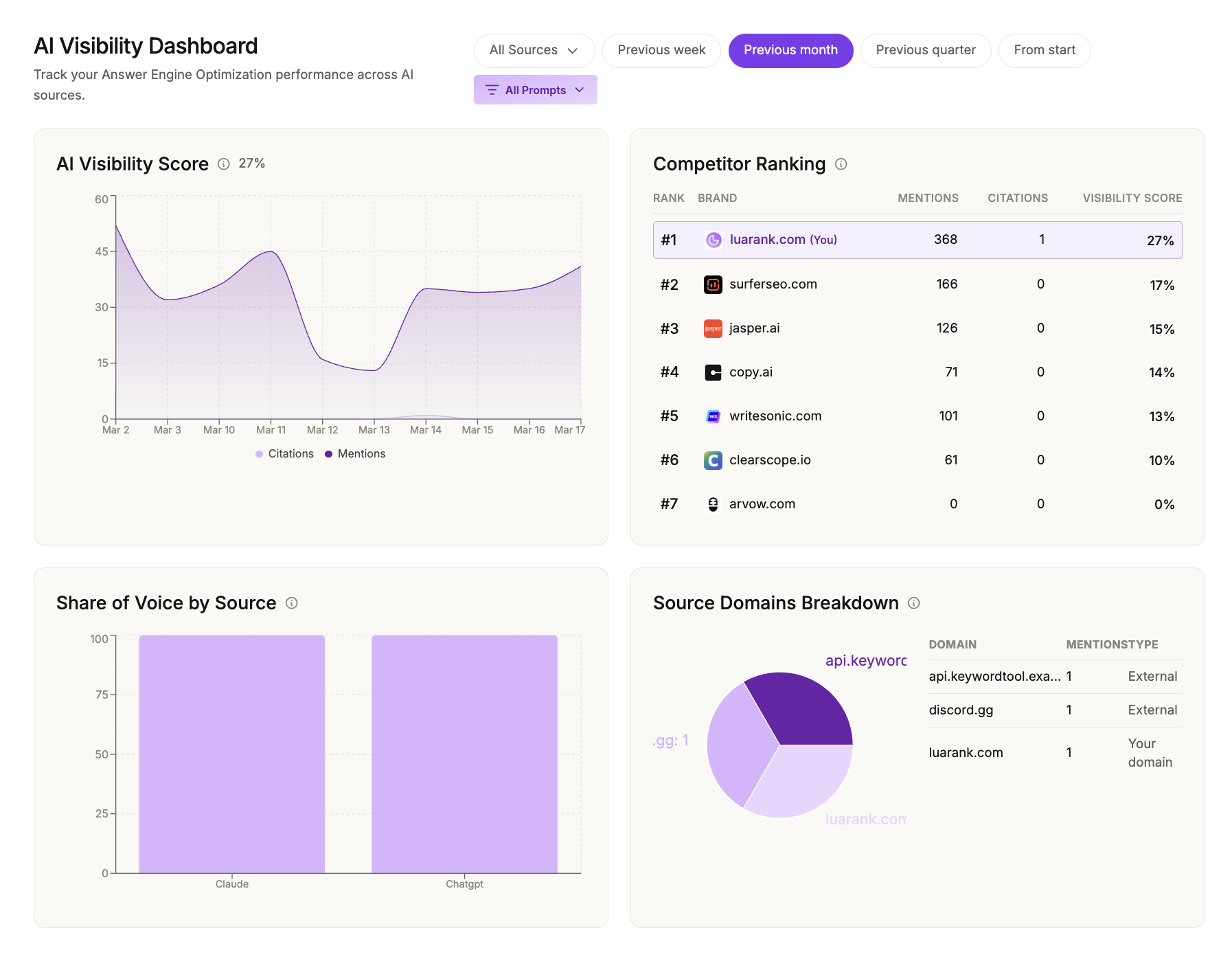
AI Visibility Dashboard: Track How Your Brand Appears Across AI Search Engines
AI search visibility dashboard to monitor your brand across ChatGPT, Perplexity, Google AI Overviews, and Claude with competitor analysis.
 Guilherme Hortinha
Why Teams Choose AI-Powered Blog Automation
Blog automation benefits include 80% time savings, consistent scaling, and strategic advantages. See how teams achieve 3x content velocity while improving quality.
Louis Lua