How Your Lua Article Was Created (And Why It Shows Up in AI Search)
 Guilherme HortinhaCo-Founder of Lua Rank & AI Visibility Strategist
Learn how articles show up in AI search through strategic optimization. Discover why 90% of content gets ignored by AI models and what makes articles AI-visible.
Here's a reality check: 90% of content published online never appears in AI-generated answers from ChatGPT, Google AI Overviews, or Perplexity. Even content that ranks on the first page of Google gets ignored by AI models when users ask direct questions.
Writing content isn't the problem. The problem is thinking that publishing articles automatically makes you visible in AI search. Traditional content marketing assumes search engines will crawl, index, and rank your pages. AI systems work differently. They don't rank pages at all. They select sources they trust and extract answers they can verify.
This article exists because we built it using the same principles that determine how articles show up in AI search. We'll show you exactly what makes content AI-visible and why most approaches fail before they start.
How AI Models Actually Select Content
Search engines rank pages. AI models select answers. The difference matters more than most marketing teams realize.
When someone asks ChatGPT "What's the best project management tool for remote teams?" the model doesn't search through billions of pages and rank them by relevance. It identifies patterns in training data, cross-references multiple sources, and synthesizes an answer it can defend.
This means how ChatGPT chooses answers depends on three factors traditional SEO doesn't address:
Source authority: Does the content come from a domain the model trusts for this topic?
Answer completeness: Can the model extract a full response without guessing or filling gaps?
Citation confidence: Will mentioning this source strengthen or weaken the model's credibility?
We track visibility across ChatGPT, Google AI Overviews, and Perplexity for 40+ brands. The content that gets selected shares specific structural patterns that most articles ignore.
Why Blog Posts Don't Show in AI
Most business blogs optimize for Google, not AI models. They target keywords, build backlinks, and hope for traffic. But why blog posts don't show in AI comes down to how they're structured and positioned.
AI models need content that answers questions completely in a format they can extract and verify. Standard blog posts fail because they:
Target search queries, not conversational prompts
Bury key information in long introductions
Focus on driving traffic rather than providing complete answers
Exist in isolation without supporting context

What Makes Articles AI-Visible
Understanding how AI selects content requires shifting from page-level thinking to system-level thinking. AI models don't evaluate individual articles. They evaluate your site's authority on specific topics and how well your content covers user questions.
Articles that appear in AI search results share four characteristics:
1. They Target Real User Prompts
People don't ask AI models the same way they search Google. Instead of typing "project management software remote teams," they ask "What project management tool should I use for my distributed team of 15 people?"
AI-visible content addresses these conversational queries directly. The headline, introduction, and structure match how people actually phrase questions to AI systems.
2. They Cover Topics Comprehensively
AI models prefer sources that provide complete answers without requiring additional research. Comprehensive coverage means:
Addressing the main question and common follow-ups
Including relevant data, examples, and context
Covering edge cases and exceptions
Providing actionable next steps
This article covers how to rank in AI search by explaining the selection process, content requirements, and systemic approach. We're not just listing tips or tactics.
3. They Use AI-Friendly Content Structure
AI models extract information more easily from content that follows clear hierarchical structures. This includes:
Structure Element | Purpose | AI Benefit |
|---|---|---|
Clear headings (H2, H3) | Topic organization | Easy section identification |
Bullet lists | Key points summary | Simple extraction format |
Data tables | Structured information | Direct answer sourcing |
Direct answers upfront | Immediate value | Citation confidence |
4. They're Part of Broader Topic Coverage
Single articles rarely appear in AI search results unless they're supported by related content that establishes topical authority. AI models look for sites that consistently cover topics with depth and accuracy.
Our AI visibility content strategy includes this article alongside content about AI search optimization, visibility measurement, and implementation tactics. Each piece reinforces the others and builds comprehensive topic coverage.
Beyond Individual Articles: Building AI Visibility Systems
Here's what most marketing teams miss: AI visibility isn't about optimizing individual pieces of content. It's about building systems that consistently appear in AI-generated answers across multiple prompts and topics.
We've analyzed visibility patterns for hundreds of queries across different industries. Companies that achieve consistent AI visibility follow structured approaches rather than publishing random articles and hoping they get selected.
The 12-Month Execution Reality
AI visibility takes time because it requires building authority, not just publishing content. Our data shows that brands typically see first meaningful appearances in AI search results within 30-40 days, but comprehensive visibility takes 8-12 months of consistent execution.
This timeline reflects how AI models evaluate sources:
Months 1-2: Content gets indexed and evaluated
Months 3-4: Initial citations for niche queries
Months 5-8: Broader topic authority recognition
Months 9-12: Consistent visibility across competitive queries
Most businesses either don't plan for this timeline or don't have systems to execute consistently across it. They publish a few optimized articles, see limited results in the first month, and assume AI search doesn't work for their industry.
Why Traditional Agencies Fall Short
Traditional SEO agencies charge $5,000-$10,000 monthly but weren't built for AI visibility. They optimize for Google rankings, build links, and report on traffic metrics that don't correlate with AI citation rates.
AI visibility requires different skills: understanding how models select sources, structuring content for extraction, building topical authority systematically, and tracking visibility across multiple AI platforms.
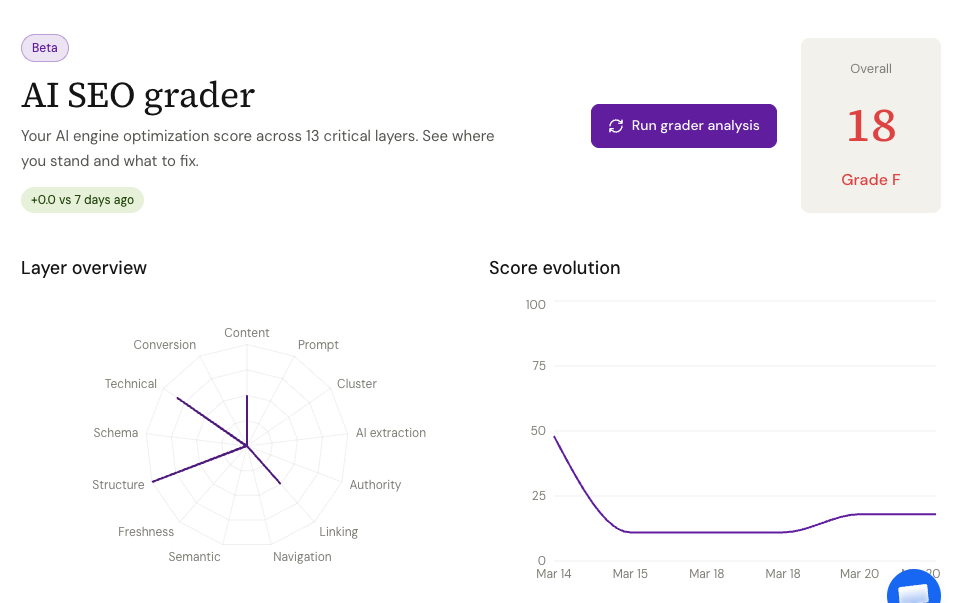
That's why we built Lua as an alternative approach. Instead of expensive agency retainers, businesses get a structured programme that scans their current visibility across 13 optimization layers, generates a 12-month execution plan, and provides day-by-day tasks with platform-specific instructions.
We've worked with marketing teams at companies from 10-200 employees who want to build AI visibility before their competitors claim it. The programme typically requires 3-5 hours weekly from someone who can follow systematic instructions and track progress consistently.
The results speak for themselves: brands using our structured approach achieve first-page ChatGPT rankings in under 40 days. More importantly, they build sustainable visibility systems that compound over time rather than relying on individual content pieces to perform.
If you're evaluating AI search as a channel, we can show you exactly where your current content stands across AI platforms and what systematic changes will drive measurable visibility improvements.
Frequently Asked Questions
How long does it take for articles to show up in AI search results?
Most articles appear in AI search results within 30-40 days if they're structured correctly and target real user prompts. However, achieving consistent visibility across competitive queries typically takes 8-12 months of systematic content creation and optimization. The timeline depends on your site's existing authority, content quality, and how comprehensively you cover topics that AI models value.
What's the difference between optimizing for Google vs AI search?
Google optimization focuses on ranking pages through keywords, backlinks, and technical SEO factors. AI search optimization focuses on becoming a trusted source that models can extract complete answers from and cite confidently. This requires different content structures, comprehensive topic coverage, and building authority across related subjects rather than targeting individual keywords.
Can existing blog content be optimized for AI visibility?
Yes, but most existing content needs significant restructuring rather than minor tweaks. You'll need to reorganize information to answer conversational queries directly, add comprehensive coverage of subtopics, improve content structure for easy extraction, and create supporting content that builds topical authority. Simply adding AI-focused keywords to existing blog posts rarely improves visibility in AI search results.
Related articles
What Makes Content Show Up in ChatGPT, Gemini, and Google AI
Discover what makes content show up in AI search across ChatGPT, Gemini, and Google AI. Learn the four key selection factors that drive visibility.
Guilherme Hortinha
Why Most Blog Content Is Invisible to AI in 2026 (And How to Fix It)
Why blog content is invisible to AI systems like ChatGPT and how to fix it. Learn the key differences between traditional SEO and AI optimization.
Guilherme Hortinha