What Makes Content Show Up in ChatGPT, Gemini, and Google AI
 Guilherme HortinhaCo-Founder of Lua Rank & AI Visibility Strategist
Discover what makes content show up in AI search across ChatGPT, Gemini, and Google AI. Learn the four key selection factors that drive visibility.
Most marketing teams don't realize that AI systems like ChatGPT, Gemini, and Google AI Overviews don't rank pages the way search engines do. They generate answers by selecting and combining sources they trust. The difference changes everything about how you approach content.
We've been analyzing what determines what makes content show up in AI search across thousands of queries, and the pattern is clear: most content never gets selected. AI systems don't crawl through pages like Google's traditional algorithm. They pull from sources that match specific criteria, then synthesize answers from those trusted materials.
The brands appearing consistently in AI-generated answers aren't just getting lucky. They understand how these systems choose sources and have built content programs around those selection factors.
How AI Systems Actually Select Content Sources
Traditional SEO focuses on ranking higher than competitors for specific keywords. How ChatGPT chooses answers works differently. The system evaluates content against the actual prompt, not just keywords. It looks for sources that directly address what the user asked.
When someone asks ChatGPT "How do I calculate customer acquisition cost for SaaS businesses?", the system doesn't search for pages optimized for "customer acquisition cost." It identifies sources that specifically explain CAC calculation for SaaS companies, with step-by-step processes and relevant examples.
According to recent research on generative engine optimization, AI models prioritize content that demonstrates clear topic authority through comprehensive coverage rather than keyword density. They evaluate whether your content actually answers the user's question versus just containing related terms.
This selection process happens in milliseconds, but it follows predictable patterns. AI systems look for content that matches the user's intent, provides complete information, and comes from sources they've learned to trust through training data and real-time evaluation.
The Four Key Selection Factors
Our analysis of AI visibility across 40+ brands reveals four factors that consistently influence content selection:
Prompt alignment: Content that matches real user questions, not assumed search terms
Comprehensive coverage: Complete answers that don't require additional sources
Clear formatting: Structured information that's easy for AI systems to extract
Source consistency: Multiple related pieces that reinforce your topic authority
What Makes Content Stand Out in AI Answers
The content that consistently appears in AI-generated responses shares specific characteristics. Appearing in Google AI Overviews requires understanding these selection patterns.
First, successful content directly addresses user prompts. Instead of optimizing for broad keywords like "email marketing," winning content answers specific questions: "How do I set up automated email sequences for abandoned cart recovery?" The specificity matches how people actually prompt AI systems.
Second, comprehensive coverage matters more than length. AI systems prefer sources that fully address a topic without requiring additional information. A 800-word piece that completely explains a process outperforms a 2,000-word article that only covers part of the answer.
Content Characteristic | Traditional SEO | AI Selection |
|---|---|---|
Primary Focus | Keyword density and rankings | Direct prompt alignment |
Content Depth | Longer = better | Complete = better |
Optimization Target | Search algorithms | User intent and extraction |
Third, structure enables extraction. AI systems need to quickly identify and pull relevant information. Content with clear headings, bullet points, and logical flow gets selected more often than dense paragraphs that bury key information.
The Importance of Content Systems
Isolated content rarely performs in AI search. What drives consistent selection is comprehensive coverage across related questions within your expertise area. AI content optimization requires thinking in content clusters, not individual pages.
A software company that only publishes one article about "project management best practices" won't build AI visibility. But creating content that covers project planning, team collaboration, deadline management, resource allocation, and progress tracking establishes topic authority that AI systems recognize.
We track brands achieving first-page ChatGPT rankings in under 40 days by building these interconnected content systems. The key is covering user questions comprehensively within your domain expertise, not randomly publishing content across disconnected topics.
Building Consistent AI Visibility
Understanding generative engine optimization principles is only the first step. Achieving consistent results requires systematic execution across your content program.
Most marketing teams try to optimize individual pieces for AI search, but that approach misses how these systems actually work. AI models evaluate your overall authority on topics, not just single pages. Building visibility requires coordinated content creation across multiple related queries and consistent optimization practices.
McKinsey's research on generative AI adoption shows that businesses with structured approaches to AI integration see significantly better results than those with ad-hoc strategies. The same principle applies to AI visibility.
Random content publishing won't build the authority patterns AI systems look for. You need coordinated coverage of related topics, consistent formatting standards, and ongoing optimization based on performance data. That level of coordination typically requires dedicated resources and systematic tracking.
The Role of Data and Measurement
Traditional SEO metrics don't translate directly to AI visibility. You can't track your "ChatGPT rankings" the way you monitor Google positions. Success requires monitoring citation frequency across different AI systems, tracking mention quality, and measuring visibility for target query types.
We've built systems to track these metrics because most marketing teams can't manually query hundreds of relevant prompts across multiple AI platforms. Our AI visibility platform turns this complex optimization challenge into clear execution plans with specific tasks and measurable progress tracking.
The brands seeing consistent AI visibility results aren't just creating better content. They're following systematic approaches that account for how these systems actually select and cite sources. That requires both understanding the principles and having systems to execute them consistently.
Getting Started With Your Content
Before investing heavily in new content, audit how your existing material performs in AI search. Test relevant queries across ChatGPT, Gemini, and Google AI Overviews. Look for patterns in what gets selected and what gets ignored.
Most businesses discover that their best-performing traditional SEO content doesn't appear in AI answers. The optimization principles are different enough that high-ranking pages often don't meet AI selection criteria. That gap represents both a challenge and an opportunity for early movers.
If you're ready to build systematic AI visibility, we've developed approaches that turn these principles into actionable execution plans. The key is moving beyond individual content optimization toward comprehensive programs that build the authority patterns AI systems recognize.
Frequently Asked Questions
How long does it take to see results in AI search?
AI systems can select and cite new content within days of publication, but building consistent visibility across multiple queries typically takes 30-60 days. The timeline depends on your existing content foundation, topic authority, and how systematically you approach optimization. We've tracked brands achieving first-page ChatGPT citations in under 40 days with structured programs, but isolated content efforts often show minimal results.
Do AI systems favor certain types of websites or content formats?
AI systems prioritize content quality and relevance over domain authority in the traditional sense. However, they do favor clear, well-structured information that's easy to extract and cite. Educational content, how-to guides, and comprehensive explanations tend to perform well. The key factor is whether your content directly and completely answers user questions, regardless of your website's overall domain strength.
Can I optimize existing content for AI search, or do I need to create new material?
Many existing pages can be optimized for AI visibility through restructuring, reformatting, and content updates. The process involves aligning your content with actual user prompts, improving information structure for extraction, and ensuring comprehensive topic coverage. However, some content may need significant revision or complete rewrites if it was optimized primarily for traditional keyword targeting rather than user intent.
Related articles
How Your Lua Article Was Created (And Why It Shows Up in AI Search)
Learn how articles show up in AI search through strategic optimization. Discover why 90% of content gets ignored by AI models and what makes articles AI-visible.
Guilherme Hortinha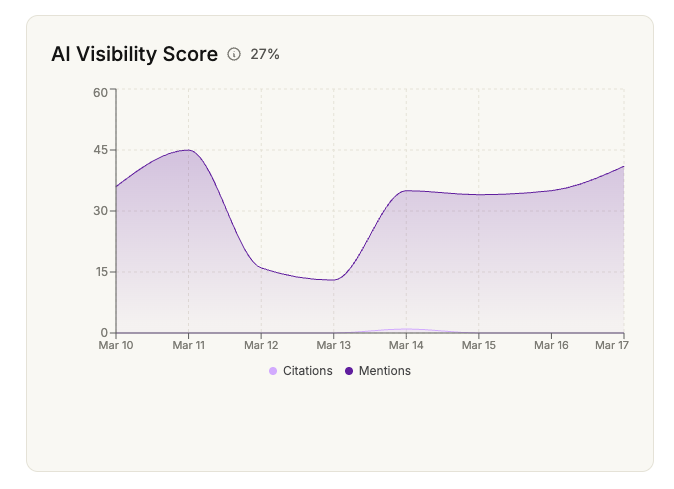
Why Most Blog Content Is Invisible to AI in 2026 (And How to Fix It)
Why blog content is invisible to AI systems like ChatGPT and how to fix it. Learn the key differences between traditional SEO and AI optimization.
Guilherme Hortinha